
Ask most people is pickleball good exercise, and they’ll hedge. “It’s fun, but is it actually a workout?” The people who say it’s not much of a workout tend to be either watching from the sideline, playing passive defensive dinking for two hours, or comparing it to running a half marathon. The people who say it’s one of the best workouts they’ve ever had tend to be the ones who played three games of competitive doubles on a hot outdoor court and can barely walk to their car.
Both groups are talking about pickleball. The difference is how you play it.
What the research actually shows is more interesting than either version of the argument. Pickleball is a legitimate moderate-to-vigorous aerobic exercise that keeps your heart rate in a productive training zone for most of the time you’re on the court. It works muscles from your calves to your core to your rotator cuff simultaneously. It produces measurable cognitive benefits. And it burns a meaningful number of calories per hour — though that number varies more than most online calculators suggest.
Here is what’s actually happening to your body during a 60-minute pickleball session, backed by research rather than guesswork.
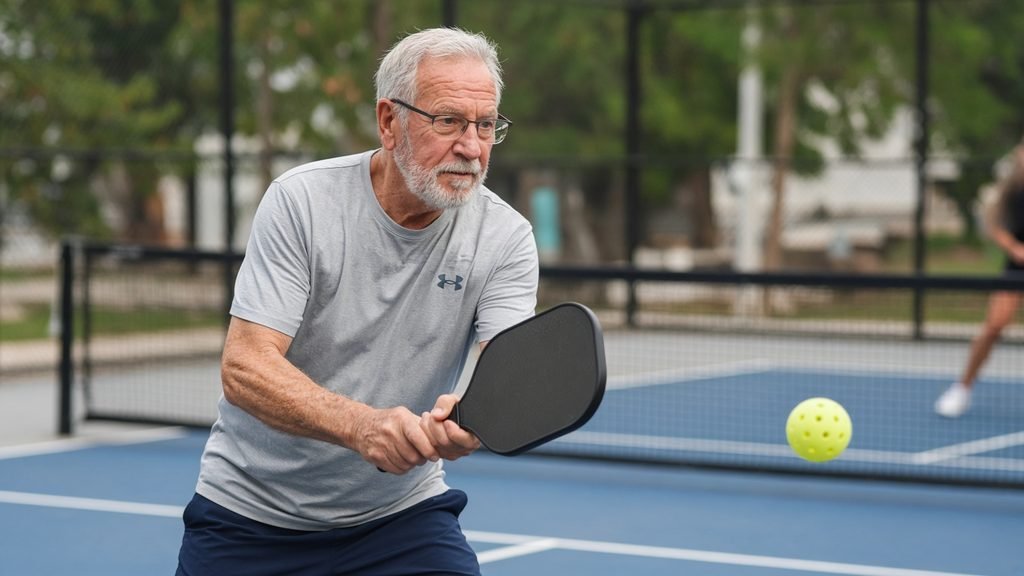
Table of Contents
1. Minutes 0–5: What’s Starting Up in Your Body
The first few minutes of any pickleball exercise session involve a cascade of physiological responses that most players never think about because they’re focused on getting the serve in.
Your sympathetic nervous system fires, sending adrenaline into your bloodstream. Your heart rate accelerates. Blood vessels in your working muscles dilate to deliver more oxygen. Your liver starts releasing glycogen into the bloodstream to give your muscles quick fuel. Your body temperature begins to rise, and your sweat glands start activating in anticipation.
This is why a proper warm-up matters more than people think. If you step onto a pickleball court cold and immediately start driving balls at 100%, you’re asking muscles and tendons to generate explosive force before the vascular response has fully ramped up. That gap between mechanical demand and physiological readiness is where a lot of early-session strains happen.
Within the first five minutes of active pickleball play, your heart rate typically moves from a resting baseline (somewhere around 60–80 bpm for most adults) to 100–115 bpm. Your breathing rate increases noticeably. Your coordination sharpens as your nervous system warms up and motor patterns activate.
This is also when you start burning carbohydrates at a higher rate than fat, because fast energy demands favor glycolytic pathways. As the session continues and intensity stabilizes, your body shifts toward a more balanced fuel mix. But in those first explosive rallies, glucose is the primary fuel source.
2. Minutes 5–20: Your Heart Rate Enters the Zone
This is the window where the pickleball fitness data gets genuinely interesting. Research from East Carolina University, along with a 2024 review in the Journal of Physical Activity and Health, confirms that recreational pickleball players maintain an average heart rate of 108–134 bpm during active play. For most adults, that represents 60–75% of their age-predicted maximum heart rate — which is squarely within the moderate-to-vigorous intensity range that exercise physiologists recommend for cardiovascular health.
What makes pickleball unique compared to a steady-state cardio workout like cycling or jogging is the interval structure of the game. Rallies are short, explosive bursts of activity — typically 3 to 8 seconds. Between points there’s a brief pause. Then another burst. That rhythm mimics interval training in a way that most players don’t consciously set up but benefit from automatically.
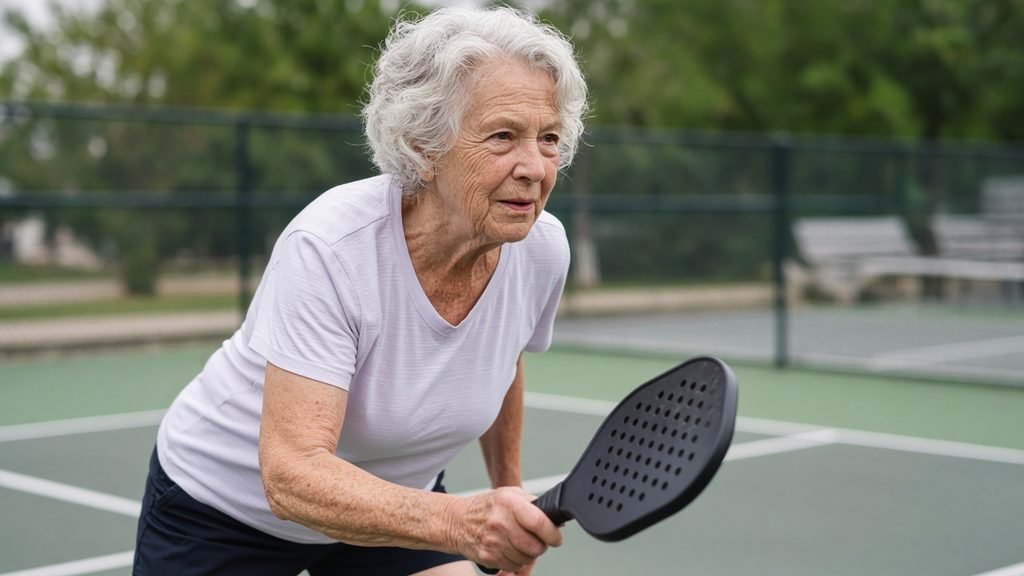
Studies show that players spend more than 70% of their court time in moderate-to-vigorous heart rate zones. For a 60-minute pickleball workout, that means roughly 42+ minutes of your session is doing real cardiovascular work. That’s a higher proportion of productive zone time than most people achieve on a leisurely gym bike or a casual walk, where it’s easy to stay too comfortable to produce a real training stimulus.
The interval pattern also has specific cardiovascular benefits that steady-state cardio doesn’t fully replicate. Research consistently shows that alternating high-effort bursts with short recoveries improves VO₂ max (your body’s capacity to use oxygen efficiently) and strengthens cardiac output — how much blood your heart can pump per beat. Over weeks and months of regular pickleball exercise, this translates into a measurably stronger cardiovascular system.
2.1. Heart Rate Zones During Pickleball Play
| Heart Rate | Zone % of Max HR | What’s Happening | Pickleball Context |
| Zone 1 — Light | 50–60% | Recovery, warm-up | Rallies between games, standing at the kitchen |
| Zone 2 — Moderate | 60–70% | Aerobic base building | Casual recreational doubles dinking |
| Zone 3 — Vigorous | 70–80% | Cardiovascular conditioning | Active competitive doubles, hard rallies |
| Zone 4 — Hard | 80–90% | High-intensity training | Competitive singles, tournament play |
| Zone 5 — Max | 90–100% | Anaerobic, short bursts | Sprint for lob, emergency wide ball retrieval |
3. Minutes 20–40: Which Muscles Are Actually Working (All of Them)
One of the arguments against pickleball as a real workout is that it’s “mostly arms.” That’s a misconception that disappears quickly if you spend 30 minutes playing serious doubles and then try to walk up a flight of stairs. The pickleball exercise pattern is a full-body chain, not an arm sport.
3.1. Lower Body: Where the Power Comes From
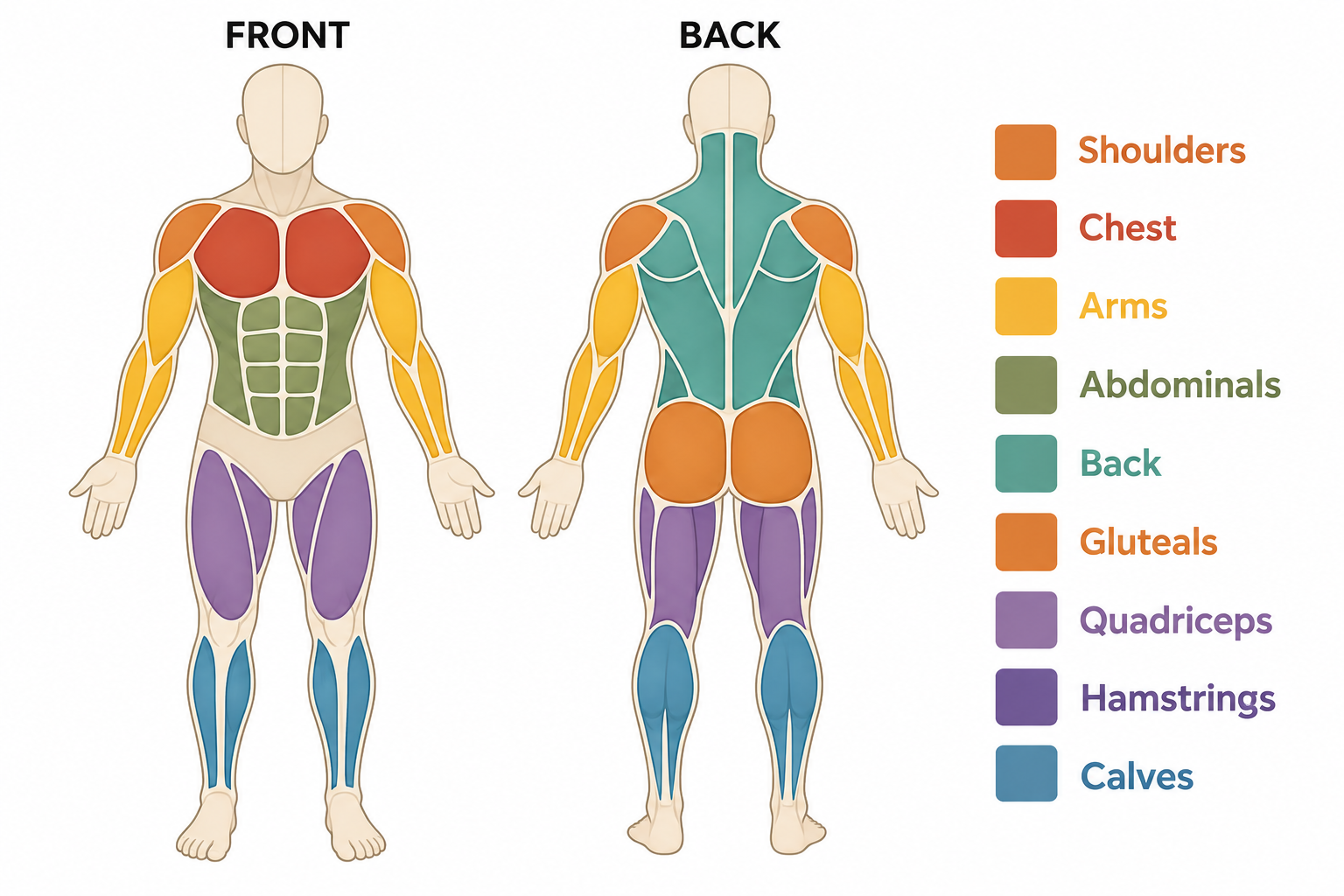
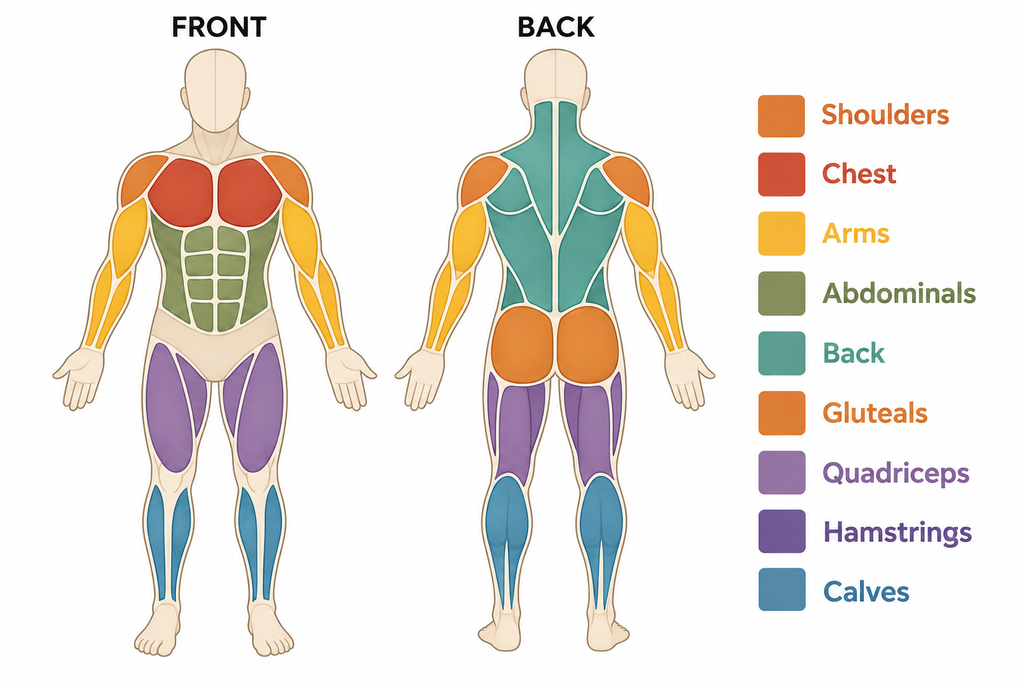
Your legs are doing more work during a pickleball workout than any other part of your body. The constant lateral shuffles, explosive split-steps, directional changes, and low ready-position stance all load the lower body intensively and repeatedly.
- Quadriceps: The primary movers for maintaining your athletic stance at the kitchen line — that slight knee bend you hold for entire games is an isometric quad contraction. They also fire hard on every lunge forward.
- Hamstrings: Critical for decelerating after explosive lateral pushes. They act as the brake system that protects your knees every time you stop suddenly.
- Glutes: The engine behind every shuffle step and directional change. Strong glutes are why some players look effortless moving laterally while others look like they’re grinding.
- Calves: Under constant load. The Achilles tendon — which the calves attach to — is one of the most commonly injured structures in pickleball, and for good reason. Every split-step, push-off, and quick stop runs through the calf-Achilles chain.
3.2. Core: The Transfer Station
Every pickleball shot travels through the core. Power is generated in your legs and transferred to the paddle through your trunk. A weak core means power leaks in translation, which is both inefficient and injury-prone.
The obliques — the diagonal muscles on the sides of your abdomen — are particularly active in pickleball exercise. Every forehand rotation, every backhand cross-body movement, every serve drives through the obliques. The deep core stabilizers (transverse abdominis) act as a natural weight belt on every directional change, protecting your spine from the shear forces of rapid pivoting.
3.3. Upper Body: Control, Not Brute Force
The shoulder, specifically the rotator cuff group, is under load throughout the session — for overhead smashes, serves, and reaching volleys. The forearm extensors and flexors manage paddle control and are the muscle group most responsible for pickleball elbow when overloaded without adequate conditioning.
The trapezius, rhomboids, and rear deltoids work continuously to maintain posture under fatigue. By the 40-minute mark of a pickleball workout, most players feel the upper back well before they feel their arms — which is a sign of good technique loading the right structures.
3.4. Muscles Used in Pickleball — Quick Reference
| Body Region | Primary Muscles | Main Role During Play |
| Lower body | Quads, hamstrings, glutes, calves, hip abductors | Power, lateral movement, deceleration |
| Core | Obliques, rectus abdominis, transverse abdominis, erector spinae | Rotation, power transfer, spine stability |
| Shoulder/arm | Rotator cuff, deltoids, biceps, triceps, forearm extensors/flexors | Shot delivery, paddle control, joint protection |
| Back/postural | Trapezius, rhomboids, rear deltoids | Posture maintenance under fatigue, shoulder positioning |
4. The Calorie Count: Real Numbers by Weight and Format
The most commonly cited pickleball calorie figures online range from “about 300 calories an hour” to “up to 700 calories.” Both numbers are technically accurate, and that range tells you something important: format and intensity matter more than the sport label.
The scientific method for estimating energy expenditure uses MET (Metabolic Equivalent of Task) values. The formula is: Calories = MET × body weight (kg) × duration (hours). Pickleball MET values have been studied across formats and range from 3.5 for very casual drilling up to 9.0 for competitive tournament singles. Most recreational doubles play lands between 4.0 and 6.5 METs.
4.1. Estimated Pickleball Calories Burned Per 60 Minutes
| Player Weight | Casual Doubles (~4.5 METs) | Competitive Doubles (~6.5 METs) | Singles Play (~7.5–9.0 METs) |
| 130 lbs (59 kg) | ~238 cal | ~344 cal | ~430–500 cal |
| 155 lbs (70 kg) | ~283 cal | ~409 cal | ~512–612 cal |
| 185 lbs (84 kg) | ~340 cal | ~491 cal | ~613–735 cal |
| 210 lbs (95 kg) | ~385 cal | ~557 cal | ~696–835 cal |
One important note: your smartwatch is probably wrong. Wearable fitness trackers have error rates exceeding 10% for pickleball specifically, because most algorithms are calibrated for steady-state activities. The stop-start rhythm of pickleball exercise — with explosive bursts followed by static standing — doesn’t fit the models these devices use. Heart rate data from your watch is more reliable than its calorie readout for this sport.
The most reliable pickleball calorie baseline from peer-reviewed research using portable metabolic sensors is approximately 355 calories for an average recreational session, based on a moderately active player in the 155–170 lb range playing doubles. Anything above that is a function of format, competitive intensity, and your body weight.
5. What’s Happening to Your Brain While You Play
This is the piece of the pickleball fitness story that doesn’t get nearly enough attention, and the research here is genuinely compelling.
Pickleball is classified as an “open-skill” sport — meaning every rally presents new, unpredictable information that your brain has to process and respond to in real time. Where is the ball going? Where are both opponents standing? What shot does this position call for? What is my partner doing? All of that is being processed simultaneously, many times per minute, for the full 60 minutes of a pickleball exercise session.
That cognitive demand does something useful. Research links open-skill sports like pickleball to increased production of Brain-Derived Neurotrophic Factor (BDNF) — a protein that supports the growth of new neurons and the maintenance of existing synaptic connections. BDNF is sometimes called “Miracle-Gro for the brain,” and its production is strongly linked to aerobic exercise combined with cognitive challenge. Pickleball delivers both at once.
Studies specifically examining pickleball health benefits for older adults have found measurable improvements in processing speed, working memory, and attention span after sustained periods of regular play. A 2026 study in the Journal of Aging and Physical Activity found that regular pickleball players demonstrated significantly better balance and leg strength than age-matched non-players — metrics that directly correlate with reduced fall risk and maintained independence.
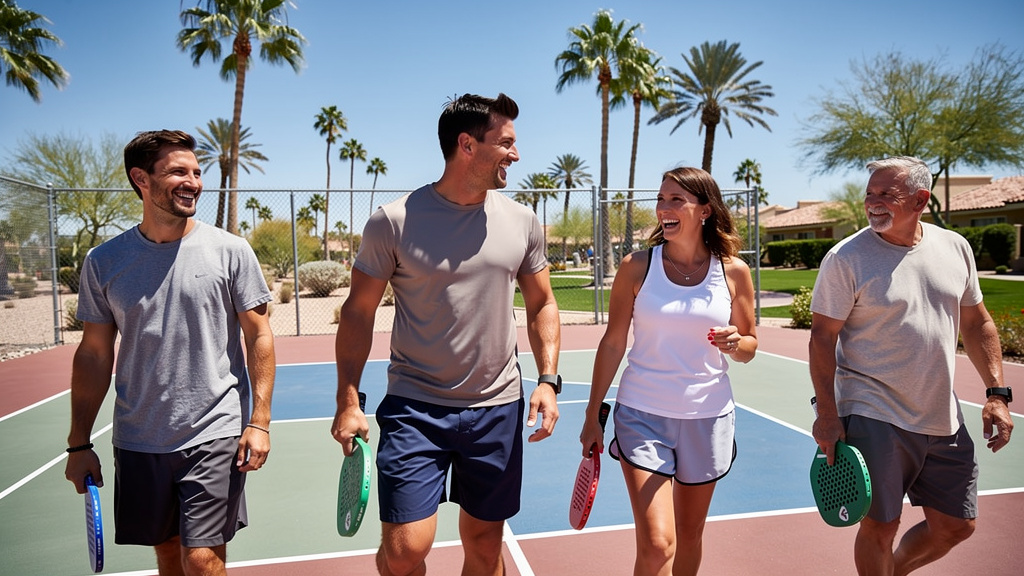
The social dimension adds another layer. Pickleball’s doubles format — small court, close proximity, natural conversation between points — produces social bonding that most solo workout formats simply can’t replicate. A 2025 national survey found that individuals who don’t play pickleball are 1.5 times more likely to report feelings of loneliness than regular players. And loneliness, as a growing body of research shows, is a major independent risk factor for cognitive decline, depression, and all-cause mortality in older adults.
There’s also evidence for what psychologists call “flow states” — the experience of being so engaged in an activity that time seems to stop. Older adults playing pickleball doubles report experiencing flow more frequently than in most other activities they do. Flow states are associated with reduced cortisol (the stress hormone), improved mood, and heightened post-activity satisfaction. In practical terms: a 60-minute pickleball workout often feels like 20 minutes, and you leave in a better mental state than you arrived in.
6. The 60-Minute Mark: What You’ve Actually Accomplished
Here’s what a solid 60-minute pickleball workout has done to your body by the time you walk off the court, assuming you played reasonably competitive recreational doubles:
- Cardiovascular system: You’ve kept your heart rate in a productive training zone for roughly 42+ of those 60 minutes. Over consistent weeks of play, this translates into measurably lower resting heart rate, improved stroke volume, and reduced resting blood pressure. A Western Colorado University study found that playing one hour, three times a week for six weeks produced significant improvements in blood pressure, cholesterol, and overall cardiac fitness in middle-aged and older adults.
- Muscles: You’ve completed hundreds of low-level resistance repetitions across your quads, glutes, calves, core, and shoulder girdle. Not enough to build new muscle mass on its own, but enough to maintain muscular endurance and reinforce the functional patterns your body needs for daily life — getting up, carrying things, changing direction.
- Calories burned: Somewhere between 280 and 500+ calories depending on your body weight and how hard you played. More than a brisk walk, comparable to moderate cycling, less than a hard run.
- Bone health: The stop-start impact of pickleball — shuffling, landing from split-steps, absorbing force through your feet and legs — stimulates bone-forming cells in a way that pure cycling or swimming doesn’t. For post-menopausal women and older men managing bone density, this weight-bearing element is meaningful.
- Brain: Elevated BDNF, reduced cortisol, and 60 minutes of dual-task cognitive engagement (moving + strategizing simultaneously) that research links to slower cognitive aging.
- Mood: Data suggests consistent pickleball exercise reduces depressive symptoms by up to 60% compared to sedentary individuals. That’s not a minor side effect.
7. Pickleball vs. Walking vs. Tennis: Honest Comparison
A lot of people come to pickleball from walking or come back to it instead of tennis. Here’s how the three activities actually stack up as workouts for a 155 lb (70 kg) person over 60 minutes.
| Activity | MET Range | Avg. Calories/Hr (155 lb person) | Avg. Heart Rate | Joint Impact |
| Brisk walking | 3.0–4.0 | ~245–280 cal | 90–105 bpm | Very low |
| Pickleball doubles (recreational) | 4.0–6.5 | ~283–410 cal | 108–134 bpm | Low–moderate |
| Pickleball singles (competitive) | 7.0–9.0 | ~475–630 cal | 130–155 bpm | Moderate |
| Tennis doubles | 5.0–7.0 | ~350–490 cal | 125–145 bpm | Moderate |
| Tennis singles (competitive) | 8.0–10.0 | ~560–700+ cal | 140–165 bpm | High |
The key takeaway: pickleball sits comfortably above walking as a cardiovascular workout, and competitive singles pickleball approaches recreational tennis doubles in intensity. The joint impact is lower than tennis for most players because of the smaller court — less sprinting distance, more controlled movement.
The real advantage pickleball has over walking isn’t the calorie burn. It’s adherence. People who play pickleball consistently show up. They come back because the game is social, competitive in a healthy way, and genuinely engaging. An exercise you actually do three times a week beats the theoretically superior workout you talk yourself out of doing.