

I want to be upfront about something before this article gets going. I like gear. I have spent more money on paddles than I am comfortable admitting and I have genuinely enjoyed most of the testing process. I am not here to tell you equipment does not matter at all because that is not true either. What I am here to tell you, after testing dozens of paddles, multiple grip configurations, and more shoe types than my wife thinks is reasonable, is that the pickleball improvement most players are chasing through equipment purchases is mostly available to them right now through something that costs nothing.
That something is not a secret. It is not complicated. But it requires admitting something that a new paddle conveniently delays admitting, which is that the gap in your game is a skill gap and not a gear gap. Those are different problems with different solutions and confusing the two is expensive.
This is not an anti-gear article. It is a reality check from someone who has been through the upgrade cycle enough times to know exactly what it does and does not deliver. I still test paddles. I still have opinions about them. But I play better now than I did two years ago and the paddle I was using two years ago is perfectly fine. The difference between then and now is not what is in my hand.
Topics We’ve Covered
1. What a New Paddle Actually Changes and What It Does Not
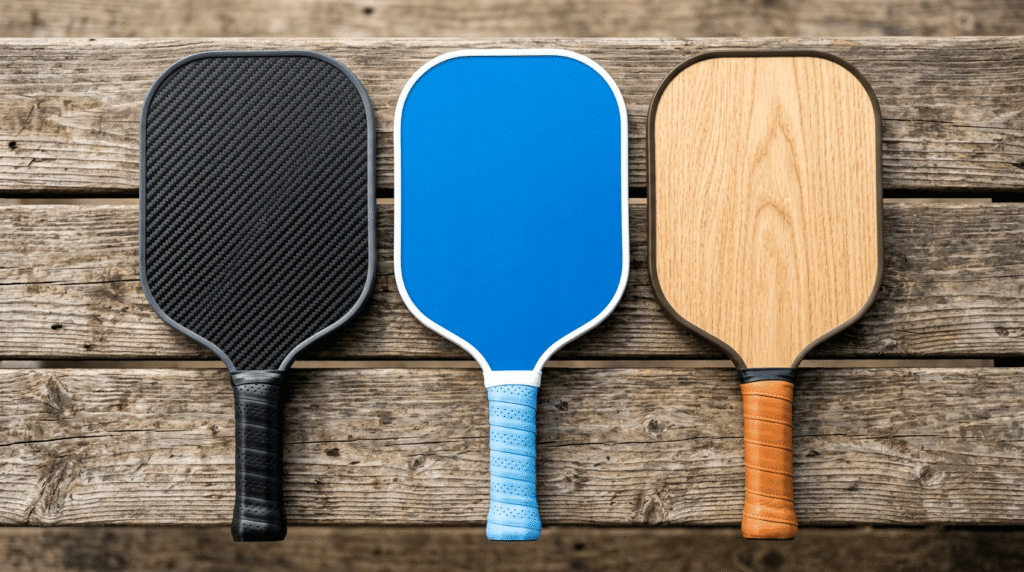
A new paddle changes feel. It changes how the ball comes off the face in your hand. It can change the amount of spin you generate, the pace on your drives, the response you get on soft shots. Those are real differences and I am not going to pretend otherwise. The problem is that players at most recreational levels experience those differences as noise rather than signal, because their technique varies enough from shot to shot that the paddle’s contribution is lost in the variation.
If your third shot drop lands in the kitchen sixty percent of the time, a new paddle might shift that to sixty-three percent or fifty-eight percent. That is within the normal variation of your existing shot. It is not real pickleball improvement. A player who lands the drop eighty-five percent of the time with a basic paddle is better off than a player who lands it sixty percent of the time with a premium carbon fiber face. The paddle did not close that gap. Practice did.
1.1. What New Paddle Feel Actually Is
The feeling of improvement you get from a new paddle is real but it is mostly psychological. The novelty effect is well documented in sports equipment research. A peer-reviewed review of twelve intervention studies published in sports medicine found that belief in equipment and expectancy of improvement are among the most significant psychological drivers of performance outcomes, independent of any actual mechanical change.
A new piece of gear produces confidence and attention, both of which temporarily improve performance. After a few weeks that effect fades and you are back to your baseline, except now you have a different paddle and the same underlying game.
I have felt this myself more times than I want to count. New paddle arrives, first session feels electric, I am reading the ball better, my dinks feel softer, my drives have more pop. Three weeks later it is just a paddle. The game is what it was. The novelty wore off and the baseline reasserted itself, which is exactly what baselines do.
1.2. The Technique Variable
Here is the other problem. Most players do not have consistent enough technique for premium paddle characteristics to express themselves reliably. Carbon fiber faces generate more spin but only if your swing path and contact point are consistent enough to take advantage of that. An elongated paddle adds reach and leverage but only if your footwork is good enough that you are consistently getting into position to use it. Equipment advantages are multiplied by technique. Weak technique multiplies very little regardless of what is in your hand.
2. The Upgrade Cycle and Why It Keeps Repeating
The pickleball paddle market has exploded over the last four years and the marketing that comes with it has gotten very good at targeting exactly the psychological moment when a player is most vulnerable to an upgrade purchase. That moment is after a loss, after a frustrating session, after watching someone with a different paddle make a shot you missed. The message is consistent: the right pickleball paddle will fix what is not working. Buy this one.
It is not cynical to notice that the upgrade cycle serves the equipment industry very well. A player who understands that pickleball improvement comes through practice buys a paddle once every few years when theirs wears out. A player who believes equipment is the primary lever buys two or three paddles a year chasing the feeling that the right one is out there somewhere.
2.1. The Sunk Cost of Switching
Every time you switch paddles you restart the adaptation period. Your muscle memory is calibrated to your previous paddle. The new one feels different, you adjust, and during that adjustment period your game is actually slightly worse than it would be if you had just kept playing with what you had. Most players interpret that adjustment dip as proof that the paddle is not right for them and switch again. The cycle continues and the game never gets the sustained consistent practice time it needs to actually improve.
2.2. What the Upgrade Cycle Costs in Practice Time
Every hour spent researching paddles, reading reviews, watching comparison videos, and thinking about your next purchase is an hour not spent on court. I am not saying research is worthless. I am saying the time allocation most players give to gear research versus actual practice is completely inverted relative to the returns each one produces. An hour of deliberate practice returns more pickleball improvement than an hour of paddle research by a factor that is not even close.
3. What I Noticed When I Stopped Switching Paddles and Started Chasing Real Pickleball Improvement
About eighteen months ago I made a deliberate decision to stop switching paddles for six months. I picked the paddle I had been using most recently, a mid-range carbon fiber that I had been playing with for about eight weeks, and committed to it regardless of what came out during that period. Several things I had been wanting to try were released during those six months. I did not switch.
What happened to my game during that period is the most useful data point I have from all my years of testing. My dink consistency went up noticeably around the two-month mark. My third shot drop became more reliable around month three. My reset confidence improved throughout. None of those improvements had anything to do with the paddle. They had everything to do with the fact that I stopped giving myself a variable to blame and started actually working on technique.
3.1. The Blame Redirect
When you have a paddle you are still getting used to, every error has a ready explanation. The face is different, the weight balance is not quite right, I am still adapting. That explanation is sometimes true and mostly convenient. It redirects attention away from the technique problem and toward the equipment variable. Staying with one paddle for an extended period removes that redirect entirely. When the paddle is not the variable, you are forced to look at what actually is.
3.2. What I Found When I Looked
When I stopped blaming the paddle I found three specific technique problems I had been carrying for longer than I realized. My contact point on third shot drops was inconsistent, sometimes out in front where it should be and sometimes back near my hip. My footwork on resets was lazy, I was reaching instead of moving. And my grip pressure was varying too much between shots, tight on drives and loose on dinks but not consistently either way.
All three of those problems had been present across multiple paddle switches. The paddle never fixed them because paddles cannot fix technique problems. Only practice fixes technique problems.
4. The Three Things That Actually Moved My Game Forward
After the six month paddle freeze I had a much clearer picture of what was actually producing pickleball improvement versus what was producing the feeling of improvement. These three things moved my game forward in ways that no paddle switch ever did.
4.1. Deliberate Contact Point Work
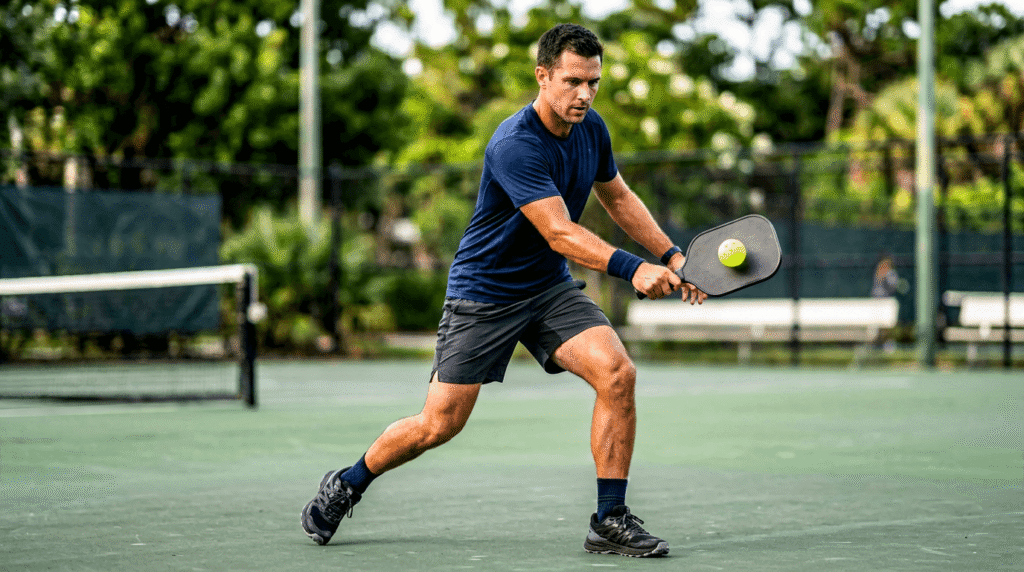
This was the single biggest source of pickleball improvement in my game over the past eighteen months and it cost nothing. Not just hitting balls but specifically working on where contact happens relative to my body on different shot types. Drop needs contact out in front and slightly below the net line. Reset needs a relaxed wrist and paddle face open at contact. Drive needs contact forward with weight transferring into the shot. I spent about three weeks hitting with a training partner who would call out my contact point after each ball. Bad, good, too late, perfect. That feedback loop fixed the inconsistency faster than any amount of solo drilling.
Contact point work requires no special equipment. It requires a partner, some balls, and the willingness to slow down and do something boring repetitively until it stops being inconsistent. Most players skip this entirely because it is less exciting than buying something new.
4.2. Footwork Patterns Before the Ball Arrives
I started filming myself during open play sessions, just phone propped up on the side. What I saw in the footage was that I was consistently arriving late to my shots, moving after the ball was already near me rather than moving when I saw it coming. Fixing this required no equipment change. It required building the habit of reading the ball earlier and moving sooner, which took about four weeks of conscious effort before it started to feel natural.
The footwork improvement produced more pickleball improvement than any single paddle switch I have made. When you arrive early you have time to set up properly and the shot becomes easier regardless of what paddle is in your hand. When you arrive late you are improvising and no paddle helps with improvising.
4.3. Grip Pressure Consistency
This one sounds minor and the pickleball improvement it produces does not feel minor at all. I started paying attention to my grip pressure throughout rallies and found I was squeezing the handle significantly harder under pressure. Tight grip kills feel on soft shots and reduces control on drives by restricting wrist movement.
Deliberately practicing with lighter grip pressure than felt natural, specifically on dinks and resets, took about six weeks to become a default rather than a conscious effort. My soft game consistency improved more from that single change than from any paddle upgrade in the preceding two years.
5. When Gear Does Genuinely Matter
I said at the start that this is not an anti-gear article and I meant it. There are genuine situations where pickleball paddle selection matters and where the right equipment choice produces real pickleball improvement. Those situations are narrower than the marketing suggests but they are real.
5.1. Playing With Equipment That Is Actively Wrong for You
There is a difference between any paddle being roughly equivalent and some paddles being actively wrong for a specific player. A very heavy paddle on a player with a wrist or elbow issue is actively wrong. A very light paddle on a player who relies on pace and drives frequently is actively wrong. A grip that is too large or too small creates compensations that produce real technique problems. In these cases fixing the equipment issue removes an active obstacle. That is different from upgrading from adequate to premium.
5.2. Players at Higher Competitive Levels
At 4.5 and above technique is consistent enough that equipment differences express themselves reliably. A player at that level who has maxed out what they can do with their current paddle might genuinely gain something from a paddle better suited to their specific game. That situation describes a small percentage of recreational players. Most people reading this article are not in it yet.
5.3. Worn Out Equipment
Paddles wear out. The core compresses over time, the face texture degrades, the grip breaks down. A paddle that is genuinely worn out is actively hurting your game and replacing it is not an upgrade, it is maintenance. The question to ask is whether the paddle is worn out or whether it is just familiar and therefore not exciting anymore. Those are completely different situations that look the same from the outside.
6. How to Evaluate a Paddle Honestly
If you are going to test a pickleball paddle and make a genuine decision about whether it supports your pickleball improvement, here is the framework I use after years of doing this badly and then slightly better.
6.1. Commit to at Least Six Weeks
Anything less than six weeks does not give you enough data to separate novelty effect from genuine performance difference. The first two to three weeks you are adapting. Weeks four through six you are playing your actual game with the new paddle. Your evaluation should be based on weeks four through six, not the first session.
6.2. Track One Specific Thing
Do not evaluate a paddle based on general feel. Track one specific metric. Third shot drop success rate. Reset errors per session. Unforced drive errors. Pick the thing that matters most to your game and track it with both paddles if you can. General feel is unreliable because it is subject to day-to-day variation, opponent quality, and the novelty effect. A specific metric cuts through that noise.
6.3. Rule Out the Technique Variable First
Before deciding a paddle is not working for you, ask whether the problem you are experiencing could be solved by a technique adjustment rather than an equipment change. If the answer is maybe, work on the technique first. You can always switch paddles after. You cannot get back the practice time you spent on the upgrade cycle instead of on the court.
7. The Grip and Shoe Conversation Nobody Has Seriously
Since we are talking about gear honestly, two pieces of equipment that actually do matter more than most players treat them: grip and shoes. Not paddle brand. Not carbon fiber versus fiberglass. Grip and shoes.
7.1. Grip Is the Only Contact Point Between You and the Paddle
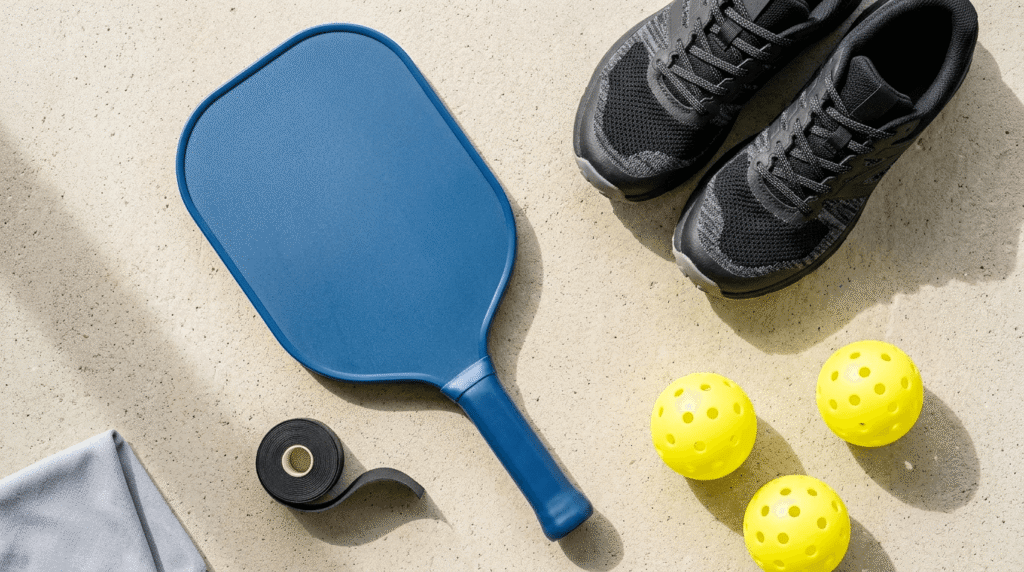
Your grip is the literal interface between your hand and everything the paddle does. A worn out grip that is slippery, too thick, or breaking down changes how the paddle feels and performs in your hand more than the paddle face material does for most players. Replacing a grip costs almost nothing and takes ten minutes. It is the highest return gear investment available at any level and almost nobody thinks about it until the grip is falling apart.
Grip size also matters more than most players discuss. Too large a grip restricts wrist movement on soft shots. Too small creates tension in the hand and fingers. If you have been playing with an uncomfortable grip for any length of time you have been playing with an active technique obstacle that a simple overgrip or replacement grip would remove.
7.2. Shoes Affect Every Single Movement You Make
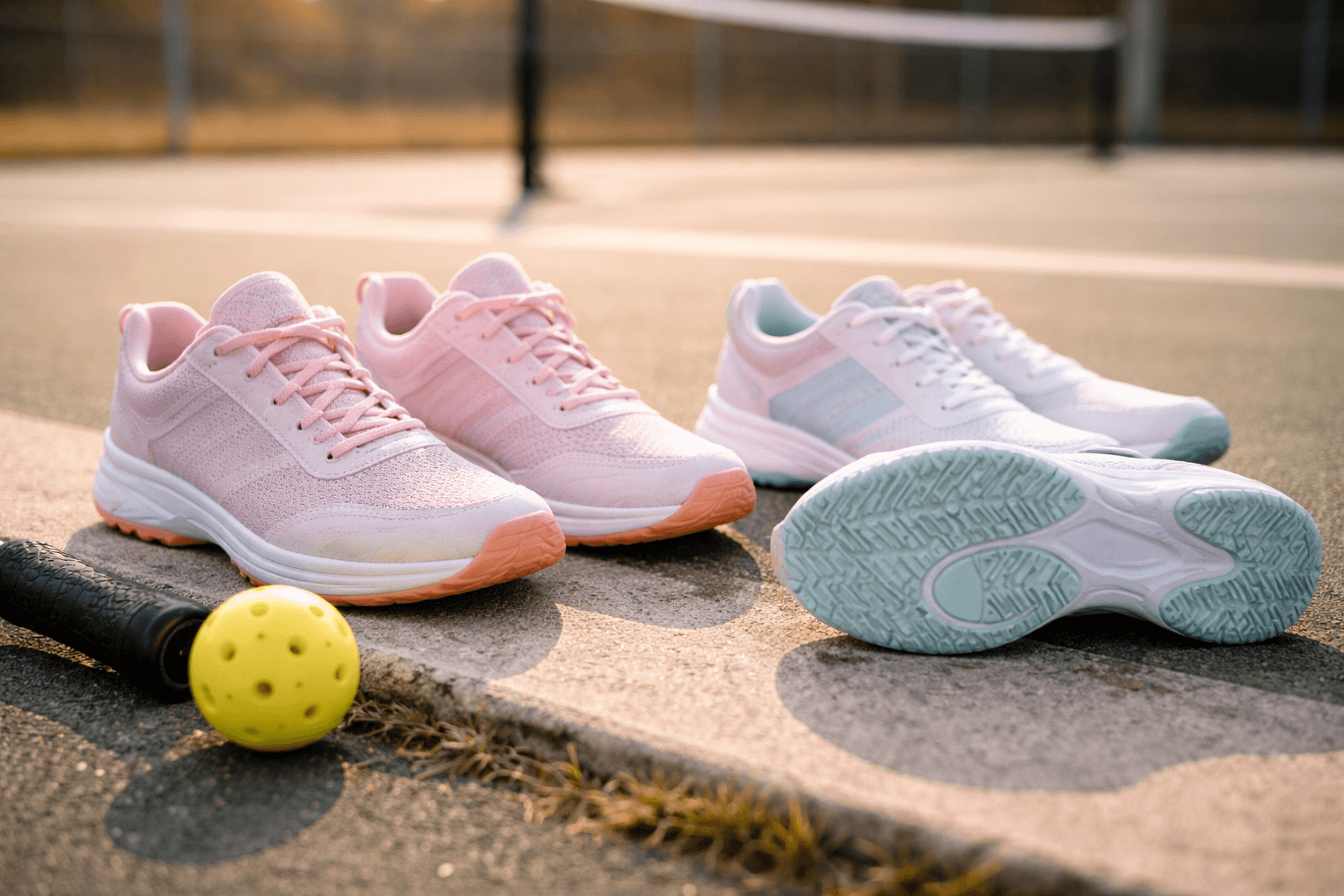
Court shoes designed for lateral movement protect your ankles, support your cuts, and give you the traction to actually move the way pickleball requires. Running shoes do not do these things reliably on court surfaces. Players who are slipping slightly on court cuts, or who feel unstable moving laterally, are experiencing a real performance problem that proper court shoes fix immediately and completely. Better footwear produces more consistent movement and more consistent movement produces better shots, through any paddle.
8. A Practical Framework for Gear Decisions
Here is how I think about gear decisions now after years of getting them wrong. It is not complicated but having a framework stops the impulse purchase from happening at the wrong moment.
8.1. Is My Current Gear Actively Limiting Me or Just Unfamiliar
Unfamiliar is not the same as limiting. If you switched paddles six weeks ago and are still adjusting, that is normal adaptation not a sign of the wrong paddle. Actively limiting means the equipment has a specific characteristic that is creating a consistent problem your technique cannot compensate for. A worn face that no longer grips the ball. A grip that causes hand fatigue. A weight that aggravates an existing issue. Those are legitimate equipment problems. Everything else is probably a technique problem wearing an equipment disguise.
8.2. Have I Addressed the Obvious Technique Issues First
Before any upgrade purchase, ask whether you have done the contact point work, the footwork work, the grip pressure work. If the answer is no, the upgrade will not close the gap those things would close. It will just give you a new thing to credit when you eventually do the work and improve.
8.3. What Is the Actual Decision
Most gear decisions at the recreational level are binary. Keep what you have and invest the money in lessons or court time. Or upgrade and invest less in practice. When you frame it that way your pickleball improvement path becomes clearer. The right pickleball paddle is the one you stop thinking about so you can start thinking about your game. Any paddle that meets that standard is good enough.
My paddle did not drive my pickleball improvement. Staying with it long enough to stop blaming it did. That is the part the marketing will never tell you and the part that is completely free.