

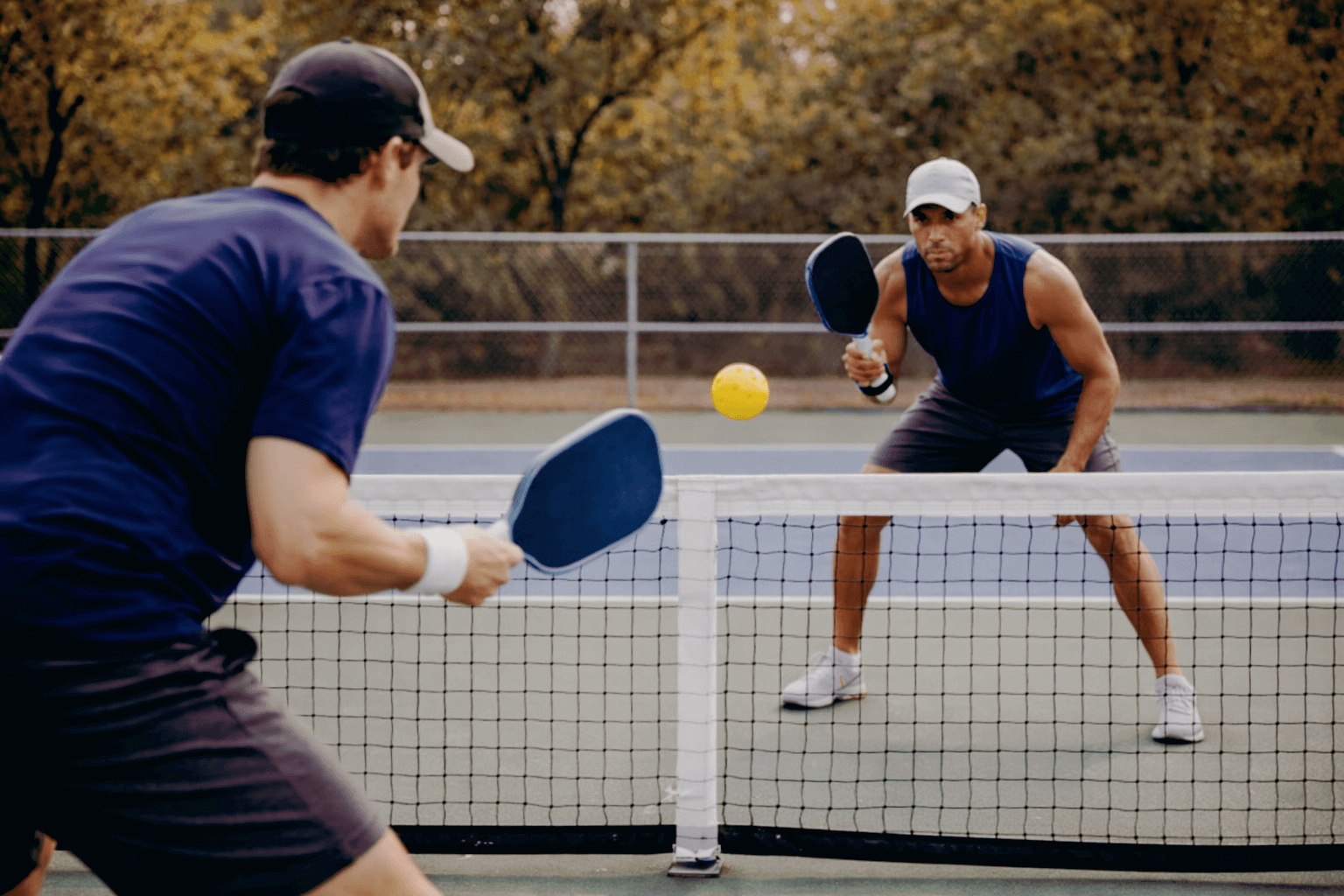
Coming from tennis I thought the speed up pickleball shot would be the easiest thing to pick up. You drive the ball hard, catch them off guard, win the point. Simple enough. Except it kept not working. I would be in a dink rally, see a ball I liked, go for it, and either dump it in the net or give them something they put away comfortably. The problem was not my technique, at least not entirely. The problem was I had no real system for deciding when to go. I was just reacting to balls that looked okay and calling it a strategy.
This article is about building an actual system, when the speed up makes sense, how to execute it properly, and why doing it less often and better will win you more points than going for it every time a ball sits up slightly.
What We’re Covering
1. What the Speed Up Is Actually Trying to Accomplish
The speed up in pickleball is a pace change. That is the whole point of it. You are in a soft exchange at the kitchen and you introduce pace suddenly, before your opponents have time to adjust. The goal is not to hit a winner off the first ball. The goal is to force a reaction under pressure that produces either an error or a shot you can attack on the next ball.
Coming from tennis, I kept treating it like a groundstroke winner. Drive it hard enough to the corner and it is over. But the kitchen is not the baseline. The distances are shorter, the margins are tighter, and the opponents are right there. Trying to end the rally on the first speed up is usually the wrong objective. You are looking to create a problem, not necessarily solve it in one shot.
Think of it more like a jab than a knockout punch. The jab sets up the knockout. The speed up sets up the putaway. That reframe changed how I used the shot completely because it meant I stopped needing the first ball to be perfect and started thinking about what I wanted the second ball to look like.
Most players who struggle with the pickleball speed up shot are struggling because they have the wrong objective in mind. They want a winner. They should want a reaction.
2. The Panic Button Habit and How to Break It
2.1. What Panic Looks Like at the Kitchen
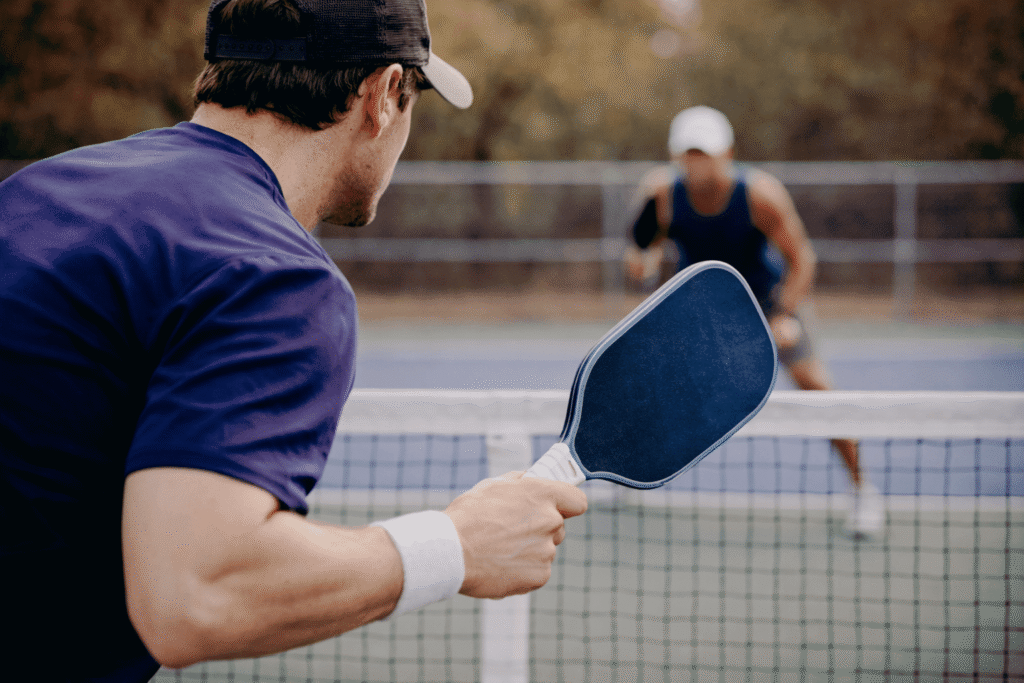
In tennis there is a thing players do when they are uncomfortable at the net. They start poaching when they should be holding position, or they back up when a volley is coming. In pickleball the equivalent is the panic speed up pickleball shot. You have been in a dink rally for twelve shots, you are not sure who is winning the exchange, and you fire off a speed up off a ball that is not quite right just to make something happen. Sometimes it works. Mostly it gives the point away.
The panic speed up is not really about the ball. It is about the player. The ball is just an excuse. What is actually happening is the player has lost patience or confidence in the soft game and is looking for a way out. The shot is a symptom, not the cause.
2.2. The Fix Is Simpler Than You Think
The practical fix is to set a rule for yourself and stick to it during practice sessions. Only speed up if the ball is at or above net height and you can hit it on a downward path. That is it. One rule. If the ball does not meet that condition, keep dinking. Apply this rule strictly for a few sessions and two things will happen. You will dink longer than feels comfortable, which trains patience. And when you do speed up, the ball will actually be attackable, which means the shot will work more often.
The discomfort of staying in a long dink rally is actually useful information. It tells you where your patience threshold is. Once you know that threshold you can start pushing it deliberately. Staying in the rally two or three shots past where you would normally bail out is a skill that pays off more than any speed up technique you could work on.
Your Opponents Know When You Are Uncomfortable
One thing I noticed from tennis that carries over completely is that experienced opponents read body language. When you are about to panic-speed-up there are tells. Paddle comes up slightly, shoulder tightens, weight shifts forward before you have decided to go. Players who have good hands at the kitchen pick those up even if they are not consciously tracking them. Your surprise attack is not a surprise to the people who have played enough to read the setup.
The best disguise for a speed up is genuine patience. When you look identical on every dink, the speed up is actually unexpected because there was nothing different to read.
3. When the Shot Is Genuinely Worth Taking
There are clear situations where the speed up pickleball shot is the right play. Not every ball that sits up is a good speed up. But these situations below are consistently worth taking.
3.1. Ball at or Above Net Height With Room to Drive Down
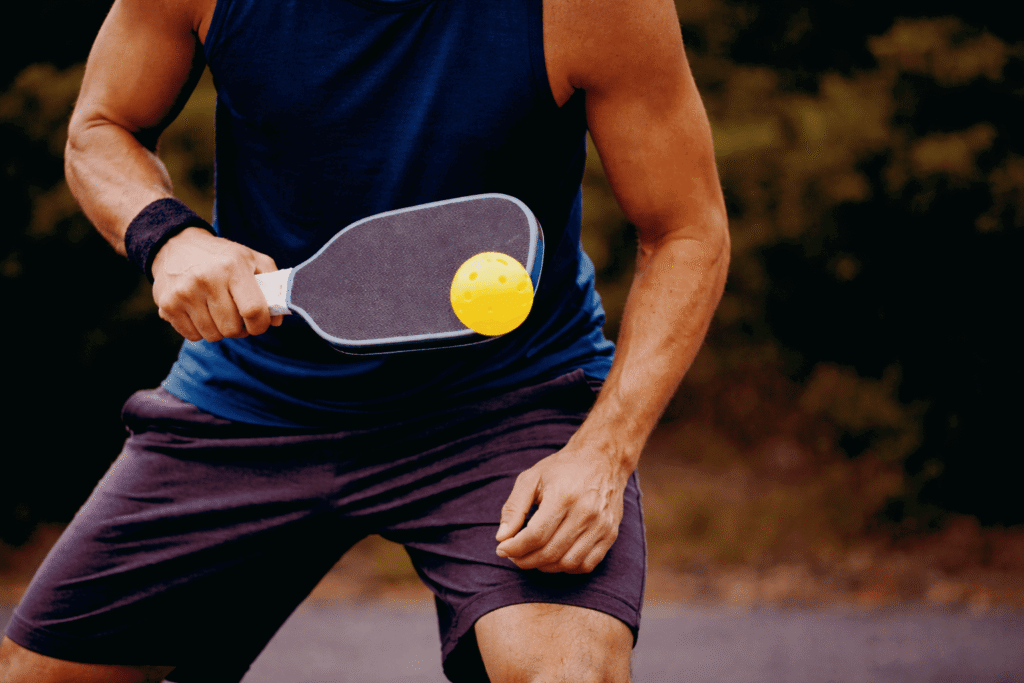
This is the most reliable trigger. A ball that bounces up at or above net height, or a volley you can take out of the air at that level, lets you hit with a downward trajectory which is the single biggest factor in keeping the shot in. Hitting down on a ball at close range keeps it low and makes the return much harder. Hitting up or even flat from the kitchen gives your opponents an angle to work with.
In tennis terms it is like the difference between a put-away volley above the net versus a half volley at your feet. One is a high-percentage attack. The other is damage control. Wait for the one that lets you go downward.
3.2. Opponent Is Out of Position or Not Set
Any time you see your opponent’s paddle drop below their hip, or they are in the middle of a lateral movement, or they just hit and have not reset their ready position, that is a window. The ball does not need to be perfect if the opponent is not ready. A well-timed speed up at a player who is half a step out of position is significantly more effective than the same shot against someone fully set with hands up.
This requires you to be watching your opponents between shots, not just tracking the ball. Split attention is something tennis players usually develop naturally because you have to track the ball and the court. In pickleball it is the same habit. Ball awareness plus opponent awareness, not just one.
3.3. You Have Established Comfort in Exchanges
If you know from earlier in the match that when fast exchanges happen you tend to win them, initiating a speed up in pickleball is a sensible play even off a ball that is only marginally attackable. You are leaning on a known advantage. If the opposite is true and fast exchanges tend to go against you, then patience and placement in the dink rally is the better strategy regardless of how attackable a ball looks.
This is just honest self-assessment. Know what you do well under pressure and build your kitchen strategy around it. Trying to speed up against players with faster hands than you is not aggression. It is just doing their work for them.
4. Target Selection, Where the Ball Needs to Go
Where you aim on a pickleball speed up shot matters as much as when you take it. Hard and unplaced is not better than medium pace and well-placed.
4.1. Body and Hip First
The most effective target most of the time is at the body, specifically around the dominant hip or paddle shoulder. Jamming the ball into someone’s hip or shoulder removes their ability to use a full swing and forces a cramped awkward response. They have to make a split-second decision about whether to take it forehand or backhand and that decision under pace usually goes badly for them. Middle of the body crosscourt gives them room. Hip or shoulder of the near opponent takes room away.
4.2. Feet on the Follow Up
If the first speed up does not end the exchange, the next target is the feet. Whatever comes back, look to drive the next ball down at shoelace height. A ball below the knees when someone is mid-reaction is extremely difficult to do anything useful with. Most players will send up a defensive pop that you or your partner can finish.
That two-ball sequence, body first then feet, is the pattern the speed up is designed to produce. Not a single winner but a combination play that compounds pressure over two shots.
4.3. Down the Line Over Crosscourt as a Default
Down the line to the near opponent is generally the better default over crosscourt. Less distance means less reaction time for them. The crosscourt opponent has more time because the ball travels further across the court. There are exceptions, a badly out-of-position crosscourt player being the obvious one. But all things being equal, the player directly in front of you is the better target.
5. Mechanics That Make It Work
5.1. Short Swing, Not a Tennis Forehand
This was my biggest adjustment coming from tennis. My instinct on any fast ball was a full shoulder turn and a big swing. At the kitchen line that backswing telegraphs what you are doing and throws off your timing. The speed up pickleball mechanics are built around a compact swing where the power comes from wrist snap and a slight body rotation, not from loading up like a groundstroke. Keep the backswing short. The snap through contact is where the pace comes from.
It took me a few weeks to trust that a short compact swing could produce enough pace to be threatening. It can. The distances at the kitchen are close enough that a firm wrist snap produces more than enough speed without needing a full swing. What you lose in potential pace you gain in disguise and consistency.
5.2. Paddle Tip Down for Disguise
In your regular dink, keep the paddle tip pointing slightly down. Keep it there whether you are going to dink or speed up. If your paddle tip rises when you are about to go, experienced players read that immediately. The preparation for the speed up should look as close as possible to the preparation for a regular dink. Low paddle, neutral stance, then the snap at contact.
5.3. Brush Up Through Contact for Topspin
Adding topspin by brushing slightly upward through the ball at contact brings the ball down faster and gives you a bigger margin to keep it in from close range. A completely flat speed up from the kitchen has to be very precisely aimed at the net height or it goes long. A little topspin gives the shot a natural arc that curves down into the court. Not a lot, just a slight upward brush. It makes the shot more repeatable over a whole match.
6. Reading Your Opponent Before You Commit
6.1. Scan the Paddle Not Just the Ball
Between dinks, scan your opponent’s paddle position. A paddle that is up and out in front means they are fully set for a fast ball. A paddle that has dropped or drifted to the side means they are not. This habit of watching the paddle rather than just tracking the ball is something tennis players can develop fairly quickly because you already split attention between the ball and the court. Apply the same thing here but shift some of that attention to the opponent’s paddle. It tells you more about when to go on a speed up in pickleball than the height of the ball alone.
6.2. Build a Picture Over Multiple Points
One point is not enough information. Over the course of a game you start to see patterns. Some players always drop their paddle after they dink. Some are slow recovering to their ready position after a wide ball. Some back up slightly when the pace picks up. These tendencies are consistent because they are habits, not one-off mistakes. Once you identify a tendency you can start building your speed up timing around it rather than just waiting for a generically good ball.
This is where the tennis habit of scouting opponents mid-match carries over well. You are building a mental model of how this specific person responds under pressure. That model makes your decisions sharper because they are based on what actually works against this opponent, not just what works in general.
7. Doubles-Specific Considerations
7.1. Your Partner Has to Move When You Go
A speed up pickleball doubles situation requires coordination that a lot of recreational players skip entirely. When you speed up, your partner needs to adjust their position immediately. If you go down the line toward the near opponent, the likely return is coming back middle or at you. Your partner should pinch toward the middle to cover that lane. If they are still standing in their original position when the counter comes, you are exposed.
You do not need a complicated system. A simple verbal cue, just go or now, gives your partner a half-second head start to move. That half second at kitchen pace is significant. Teams that communicate on speed ups consistently look more coordinated than teams that do not because they are actually covering the court rather than reacting independently.
7.2. After You Speed Up, Prepare for the Counter
Reset your paddle immediately after the speed up. Do not watch the ball. Do not adjust your position before you are ready. Paddle up, feet set, expect a hard ball back. If they pop it up instead that is a bonus. But the default assumption after a speed up should be that a fast counter is coming. Players who watch their speed up travel and then react late when the counter arrives are giving away half a second they cannot afford.
8. Drills That Build Real Decision-Making
8.1. The Constraint Dink Drill
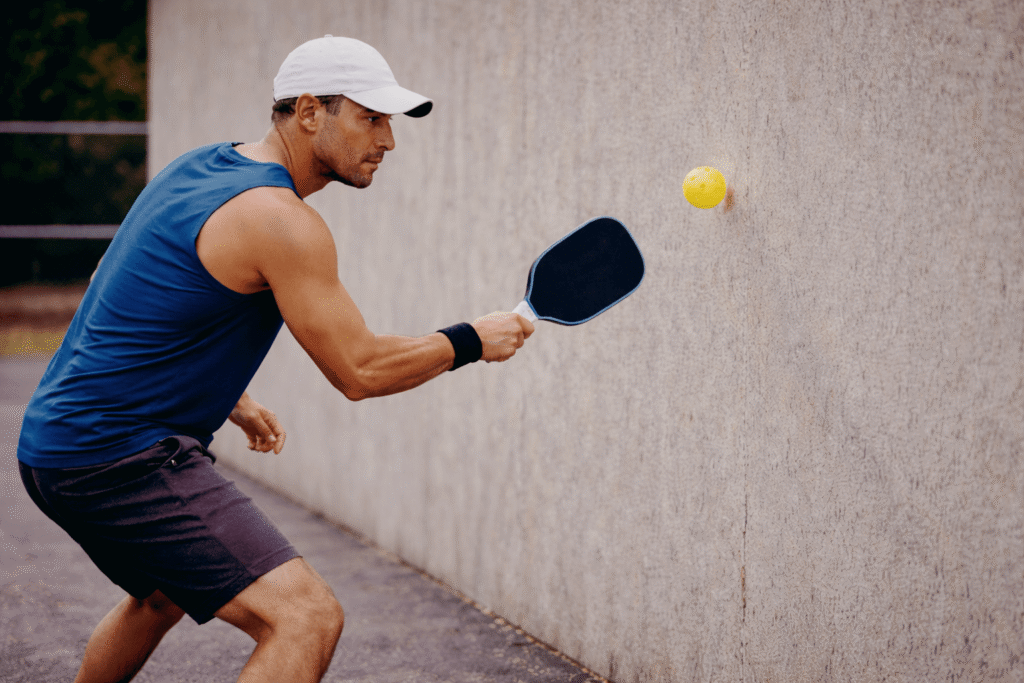
Simple and effective. Dink with a partner and apply one rule: you can only speed up pickleball when the ball is at or above net height. Everything else gets dinked back no matter how tempting it looks. Run this for ten minutes. The constraint forces you to pass on marginal balls and wait for genuine opportunities. Most players discover quickly that they were going on a lot of balls they should not have been.
8.2. Call Your Target Out Loud
Before each speed up in drills, say where you are aiming. Hip, shoulder, feet. Saying it forces intentionality and breaks the habit of just swinging hard in the general direction of your opponent. Over enough reps you stop needing to say it out loud because the targeting becomes part of the decision process automatically.
8.3. Speed Up and Stay Ready Drill
Have your partner drive balls at you from close range immediately after each speed up you hit, regardless of where your ball went. Your job is to be in ready position before their counter arrives. This specifically trains the reset-after-speed-up habit that most players never work on. The speed up is only as good as your ability to handle what comes back.
8.4. Full Rally With Speed Up Tracking
Play regular points but keep a loose count of how many speed ups you attempt versus how many create the result you wanted, either an error from them or a pop up you could attack. Do not worry about winning the point off the speed up. Track whether it created the reaction you were looking for. That metric is more honest about whether your speed up decision-making is improving than the score is.
9. What Fewer Better Speed Ups Actually Looks Like in a Game
The practical result of cleaning up your pickleball speed up shot decision-making is not that you hit fewer exciting shots. It is that the shots you do hit work more often because the setup is better.
When I started applying the one-rule system, above net height and I can drive it down, my speed up percentage in actual games went up noticeably. Not because I got faster or hit harder. Because I stopped attempting the shot on balls that were never going to work and started reserving it for balls that gave it a real chance.
The other change was in how my opponents responded. When you speed up consistently off good balls rather than occasionally off bad ones, opponents start to respect the threat. They become more careful about giving you high balls. They start thinking about their dinks differently. That shift in their behavior is actually worth almost as much as the points your speed ups win directly.
There is a version of kitchen play where you almost never speed up but the threat of it controls the whole rally. You are patient, your dinks are low and consistent, and your opponents know from experience that if they give you a ball above net height something bad is going to happen. That awareness changes how they play even when you are not going. A speed up you never hit can win points if the threat of it is established and credible.
That credibility comes from hitting the speed up in pickleball well when you do choose to go. Not from hitting it often. Most players have this backwards. They go frequently hoping to build a reputation as someone who speeds up. But a speed up off a bad ball that gets countered or goes in the net does not build a reputation as a threat. It builds a reputation as someone who can be baited into attacking at the wrong time. There is a worthwhile article on Speed Up in pickleball.
Go less. Go better. Let the shot do the work it is actually designed for.
3 thoughts on “Speed Up Pickleball: Smart Attack or Panic Button?”