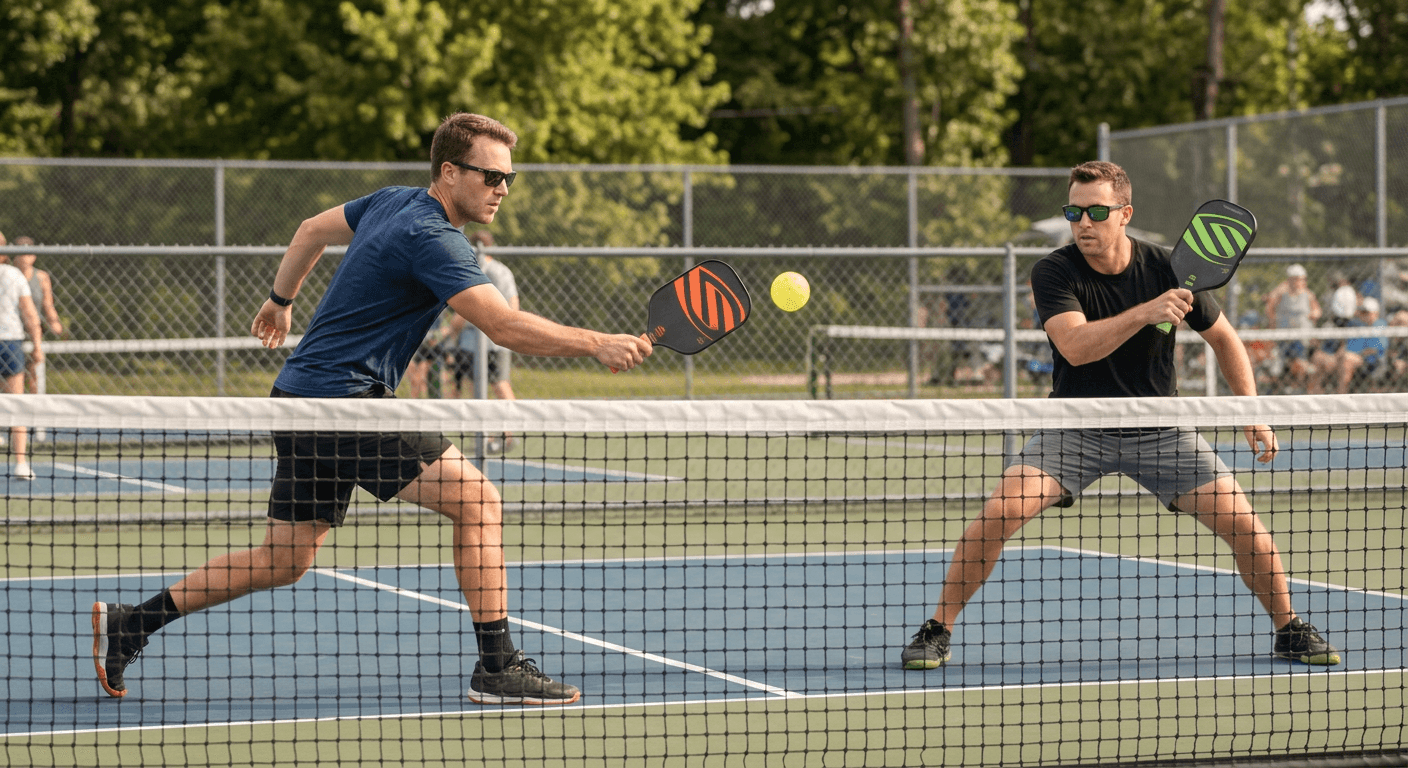

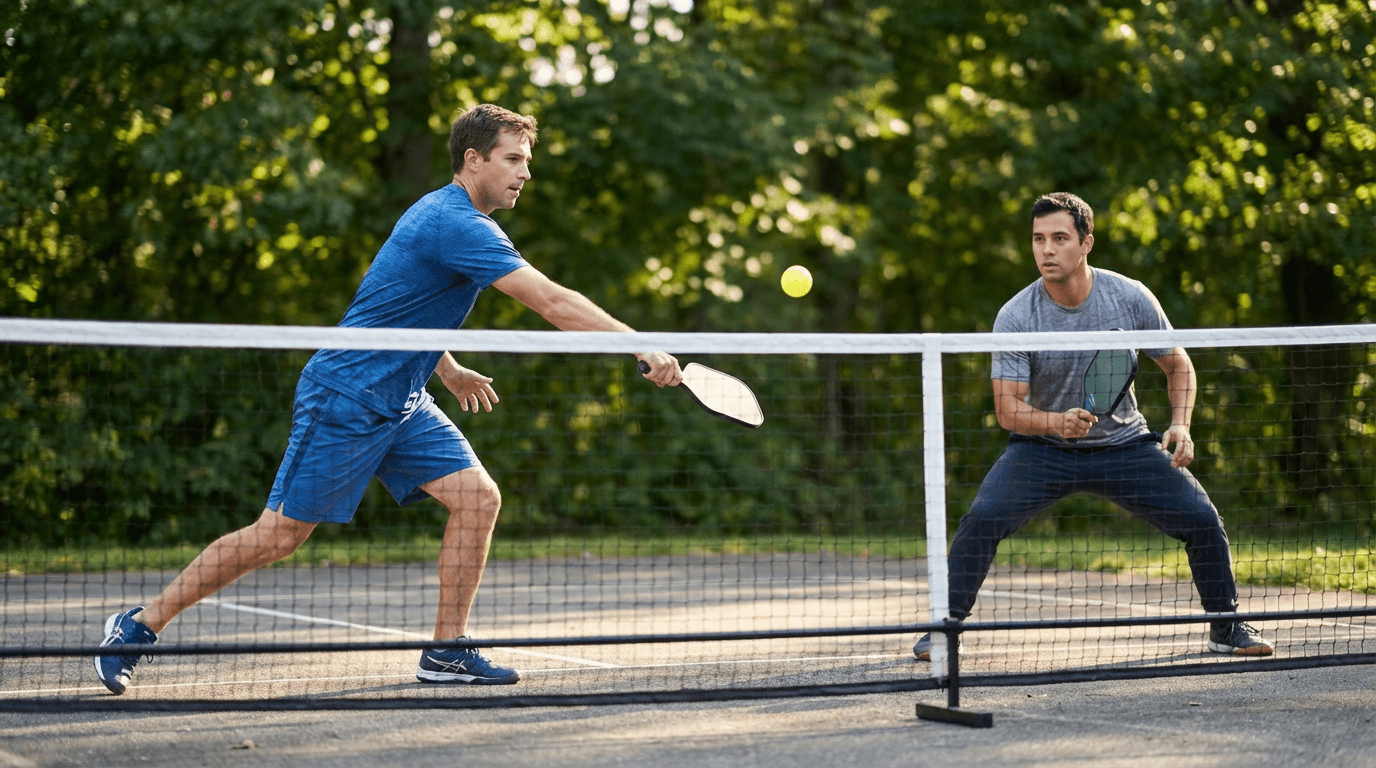
I started playing pickleball in 2020 when the game still felt pretty clearly like its own thing. Soft game, kitchen control, patience, placement over power. That was the identity of it. Four years later I watch rallies at my local courts and sometimes I genuinely have to remind myself this is not a tennis warmup drill. Harder drives, flatter trajectories, faster exchanges, players staying back longer and trading groundstrokes from the transition zone. The evolution of pickleball power game is real and it is happening faster than most people realize.
The question I keep turning over is whether that evolution is making the game better or just making it a louder, faster version of something that already existed. Because tennis exists. It is a great sport. If pickleball is just going to become tennis on a smaller court with a different ball, that is a legitimate thing to wonder about.
This is not a complaint article. I am not here to argue that power is ruining pickleball or that everyone needs to slow down and dink more. I am interested in the why and the what next. Why is the power game spreading the way it is, what is actually changing at the strategic level, and what does it mean for players like me who are trying to get better without spending forty hours a week on the court.
Table of Contents
1. What Pickleball Actually Looked Like When It Was Slower
When I first started playing, the general advice from anyone who knew what they were doing was pretty consistent. Get to the kitchen. Keep the ball low. Dink until something opens up. Do not drive unless you have a clear reason to. The third shot drop was treated almost like a religious obligation, miss it and you were basically conceding the transition game entirely.
The game rewarded patience. The player who stayed calm in long dink rallies and waited for the right ball to attack usually won. The player who got impatient and drove everything usually lost because the opponents at the kitchen could handle pace easily when it came predictably.
That was the structure. Serve, return, get to the kitchen, control the non-volley zone, win. Simple enough framework. The subtlety was all in the execution, shot selection, reading your opponent, knowing when the soft game was working and when it needed to change.
That framework has not disappeared. But it has been complicated significantly by the pickleball power game evolution that has come through the sport over the last two or three years, filtering down from the professional level to competitive rec play to the community courts where most of us actually spend our time.
2. Where the Power Game Came From
This did not happen randomly. There are specific reasons the power game developed and spread the way it did.
2.1. Professional Players Changed What Looked Possible
The first thing that happened was professional pickleball got serious and visible. When you watch top level players you see a different game than what most people were playing four or five years ago. They are faster, they take more balls out of the air, they drive from positions that recreational players would typically drop from, and their speed ups are harder and better placed than anything most rec players had seen up close. That visibility changed what people thought the game was supposed to look like.
Watch enough professional pickleball and you start trying things you saw there. That is just how sports work. The trickle-down from professional play into recreational play has accelerated significantly as the sport has grown and more people have access to high level matches on streaming platforms.
2.2. Paddle Technology Genuinely Changed
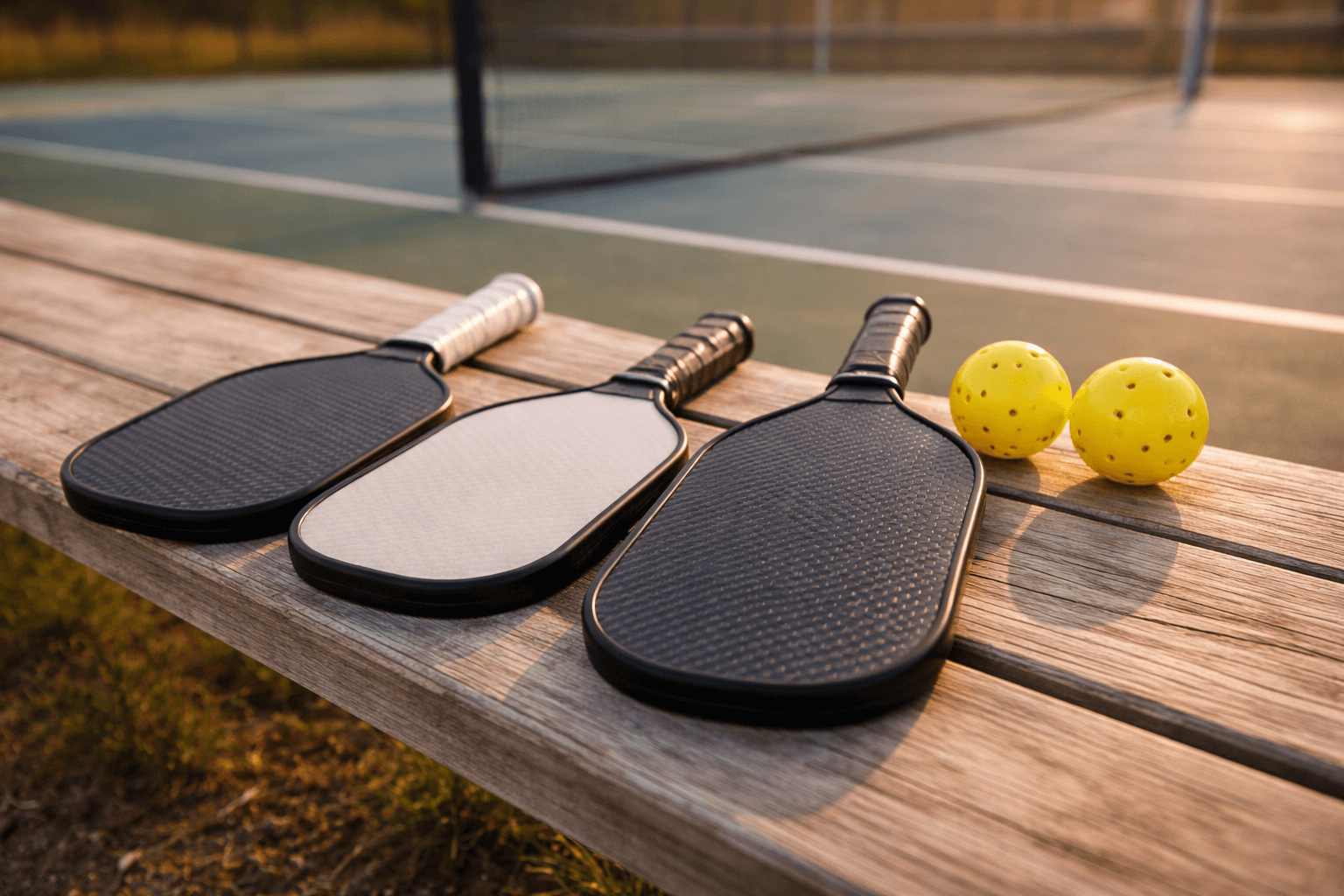
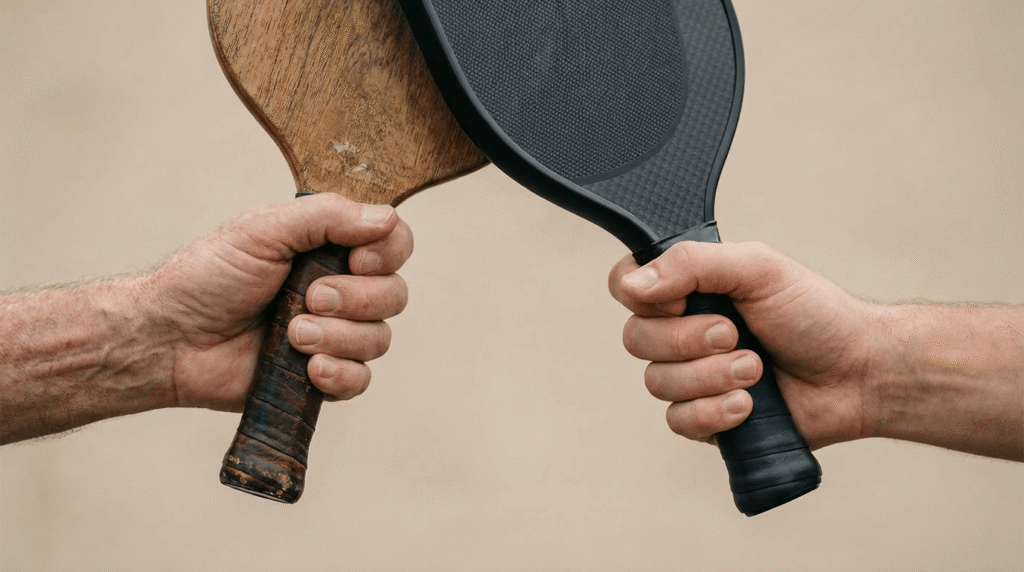
This one is real and I say that as someone who is usually skeptical about equipment arguments. The paddle technology that is available now is meaningfully different from what most people were playing with in 2020 and 2021. Carbon fiber faces, thermoformed cores, elongated shapes that add reach and leverage. These paddles generate more power with less effort and they produce a type of ball flight that older paddles simply could not.
I am not saying the paddle makes the player. But when you put a modern high-performance paddle in the hands of a player who already has decent mechanics, the pace they can generate goes up noticeably. Multiply that across an entire playing population and the average speed of the game at every level increases. That is pickleball power evolution being driven partly by equipment, not just by players deciding to hit harder.
2.3. The Return of Serve Got More Aggressive
Something specific happened strategically at the professional level that changed how the game plays out from the very first shot. Players started hitting much more aggressive returns of serve, deep and with pace, making the third shot drop genuinely difficult from the back of the court. When the return is hard and lands near the baseline, executing a quality drop requires a level of touch and timing that a lot of players do not have consistently.
So players started driving more on the third shot instead. And once you drive on three, the rally becomes a faster exchange earlier, which changes the whole structure of how points are contested. The aggressive return is arguably the single biggest tactical shift in how the game is played and it started everything else.
3. What Is Actually Changing at the Strategic Level
Beyond just hitting harder, the pickleball power game has shifted some fundamental strategic assumptions that the sport was built on.
3.1. The Transition Zone Is Being Contested
Traditionally the transition zone, the area between the baseline and the kitchen line, was just something you passed through as quickly as possible. Get to the kitchen. That was the directive. Staying in the transition zone was considered a disadvantage and you were supposed to minimize time spent there.
That thinking has shifted. Players are now intentionally staying in the transition zone and trading drives from there rather than rushing to the kitchen. The idea is that against opponents who are good at the kitchen soft game, sometimes staying back and controlling pace from mid-court is a more effective strategy than getting to the net and entering a dink battle on their terms.
Is this always right? No. But it represents a genuine strategic innovation, not just lazy play from people who never learned to transition properly. Some players are doing it deliberately and doing it well.
3.2. The Dink Rally Is No Longer Automatically Safe
For a long time the dink rally felt like neutral ground. Both teams at the kitchen, keeping the ball low, waiting for an opportunity. It was the reset state, the position you tried to get back to when things got chaotic.
It is less neutral now. With better paddles and more aggressive players, speed ups come faster, are harder to read, and are aimed more precisely than they used to be. A dink rally against a good opponent is no longer low stakes. It is an active battle where either player can turn the pace up at any moment and the exchange that follows is genuinely dangerous.
That change has made the reset shot and the soft hands defense more important than ever, not less. Paradoxically, the growth of the power game has increased the value of the soft game skills it seems to be replacing.
3.3. Serving Strategy Is Getting More Sophisticated
Serves are getting more intentional. Deep serves to the backhand, kick serves that pull the returner wide, pace variation to disrupt return timing. None of this is new in theory but more players are doing it with actual tactical intent rather than just getting the ball in. The serve is starting to function more like it does in tennis, as a shot you use to set up the third ball rather than just a formality to start the rally.
4. The Mini Tennis Comparison, Fair or Lazy?
The “pickleball is becoming mini tennis” observation comes up constantly now and I have heard it from players on both sides of the argument. Some say it approvingly, others as a criticism. I think it is both partially right and significantly oversimplified.
4.1. Where the Comparison Has Merit
The similarities are real. Longer rallies from the back of the court. More topspin on drives. More aggressive return strategy. Players who come from tennis backgrounds feeling increasingly comfortable because the game patterns are recognizable. At the highest levels of professional play you can watch certain rallies and the footwork, the shot selection, the pace of exchange does genuinely resemble tennis more than it resembles the pickleball that was being played five years ago.
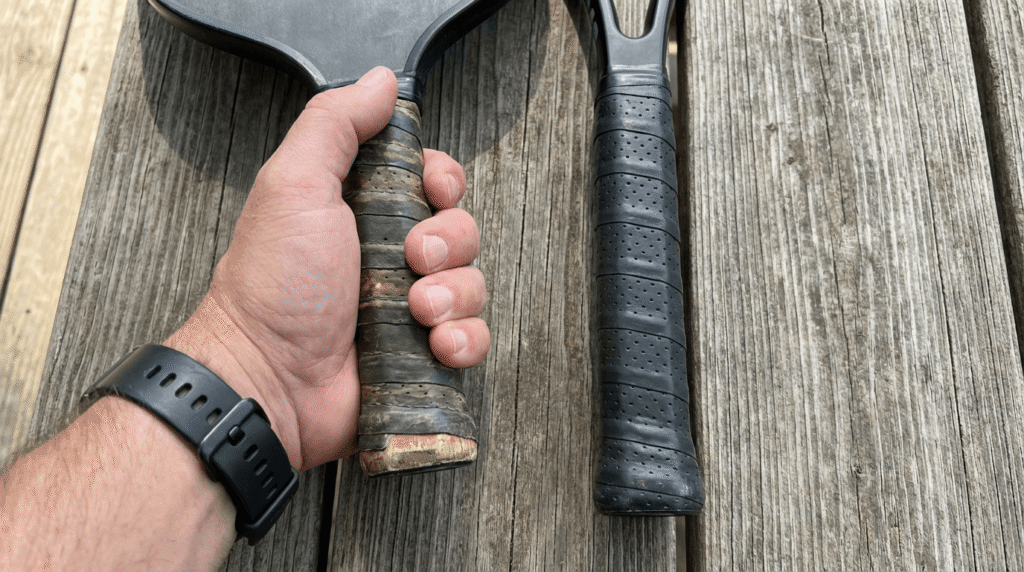
And the paddle technology argument is worth taking seriously. Paddles that generate heavy topspin and pace are moving the ball more like a tennis ball and less like the floaty dink-friendly shots that defined the early game. That is not a cultural shift. It is a physics shift driven by equipment.
4.2. Where the Comparison Falls Apart
The kitchen line does not exist in tennis. That single rule changes everything. As long as the non-volley zone exists and volleying from inside it is illegal, pickleball will never fully become tennis regardless of how hard people hit from the back of the court. The kitchen creates a strategic anchor that forces a different kind of game, the kitchen battle, the soft exchange, the reset, none of which have equivalents in tennis.
Also the court is genuinely smaller. The angles available, the distances involved, the time pressure on every shot are all different from tennis in ways that matter tactically. A drive that would be a comfortable groundstroke in tennis becomes a much higher risk shot in pickleball because the opponent is closer and the margin between the net and the baseline is tighter. The physics of the two games are different enough that the strategic overlap is real but limited.
My honest take is that pickleball is not becoming mini tennis. It is becoming a more complete sport that has absorbed some tennis-like elements while keeping the things that make it distinctly itself. That is maturation, not identity loss.
5. What the Power Shift Means for Recreational Players
This is the part I actually care about most because I am a recreational player and so are most of the people I play with. What does the pickleball power game evolution actually mean for someone playing three or four times a week at a community court trying to get from 3.0 to 3.5?
5.1. The Third Shot Drop Is Harder Than It Used to Be
When returns were gentler and shorter, the third shot drop was already hard. Now returns are deeper and faster and the drop is significantly harder to execute consistently. Players who learned the game when returns were softer and built their whole game around the third shot drop as the primary transition tool are finding that it works less reliably against players who have developed an aggressive return.
This does not mean abandon the drop. It means develop it to a higher standard or add the drive as a genuine alternative, not just a panic shot when the drop feels too hard. The third shot drive has become a legitimate tactical option at recreational level in a way it simply was not three years ago.
5.2. Soft Hands Are More Valuable Not Less
Here is the counterintuitive thing about the power game spreading. The players who handle it best are not the ones who hit back just as hard. They are the ones with good soft hands who can absorb pace, reset effectively, and then wait for the right ball. The reset shot is now one of the most important skills in recreational play precisely because more people are driving more often.
If everyone around you is hitting harder, the player who can consistently neutralize that pace and reset to a soft exchange has a real strategic advantage. The soft game did not become less important. It became more important in a different way.
5.3. You Cannot Ignore the Power Game Anymore
Four years ago you could build a solid 3.5 game almost entirely on soft game fundamentals. Get to the kitchen, keep the ball low, be patient. That strategy still works but it works against fewer opponents than it used to. Players who drive more, stay back more, and use pace more aggressively are now common enough at the 3.0 to 3.5 level that you need at least a functional response to it.
A functional response does not mean you need to out-hit them. It means you need to not fall apart when the pace goes up, you need a reset that works under pressure, and you need to understand when staying in the transition zone makes sense versus when rushing to the kitchen is the right call.
6. Is the Soft Game Dying or Just Evolving?
Short answer: evolving, definitely not dying.
The players I watch who are genuinely difficult to beat at competitive recreational level are not all-power players. They are players who can do both. They drive when the ball is right and the opponent is not set. They dink when the exchange favors patience. They reset when they are under pressure. The versatility is the thing.
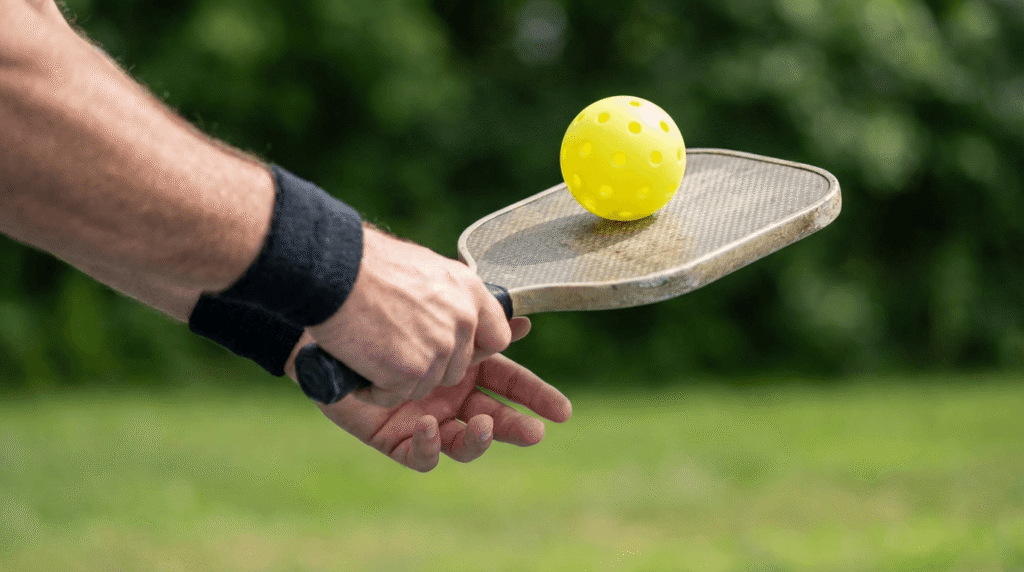
Pure soft game players are more predictable than they used to be because opponents have gotten better at pressuring the dink exchange. Pure power players are beatable by anyone with decent soft hands and patience because they create their own errors. The players in the middle who can shift between modes based on what the situation calls for are the ones consistently winning at every level.
The soft game is not dying. It is just no longer sufficient on its own at any level above casual play. You need to be able to play both games and you need to know which one to play when. That is a harder skill than mastering either one in isolation, which is probably why the middle ground players are relatively rare even as the overall level of play has risen.
7. Where the Game Is Probably Going Next
I am going to be upfront that this is speculation based on patterns I have observed. I am not a professional coach or an industry analyst. I am someone who plays a lot and pays close attention.
7.1. Serving Will Keep Getting More Tactical
The serve is the most underdeveloped shot in most recreational players’ games and I think that changes over the next couple of years. As players get more sophisticated about using the serve to set up the third ball, you will see more variation, more spin, more intentional placement at the rec level. The days of just getting the serve in and worrying about it later are probably numbered for anyone serious about improving.
7.2. The Transition Zone Will Get More Attention
Right now playing from the transition zone is either done well by players who understand it tactically or done poorly by players who just never learned to get to the kitchen. As the game matures I expect more deliberate teaching and learning around transition zone strategy, when to stay, when to go, how to drive effectively from mid-court, how to handle incoming drives while moving forward.
This is an area where pickleball instruction has not kept up with how the game is actually being played. Most beginner advice is still get to the kitchen as fast as possible. That is fine as a starting framework but it leaves out a lot of nuance that matters at 3.5 and above.
7.3. Equipment Rules Will Probably Tighten
USA Pickleball has already started paying more attention to paddle specifications and I would not be surprised to see stricter regulation of paddle technology over the next few years, particularly around surface texture and core characteristics that affect how much spin and pace can be generated. The equipment has gotten ahead of the rules and that gap usually gets closed eventually in any sport. If you want to follow how this develops, their paddle certification updates page is worth bookmarking.
Whether that slows the evolution of power in pickleball or just redirects it is hard to say. Players adapt. If raw pace gets limited by equipment rules, spin and placement will fill the gap. The game will keep evolving either way.
8. What I Think Rec Players Should Actually Do About It
After thinking through all of this I keep coming back to the same practical conclusion. The players who are going to keep improving over the next few years are the ones who treat the game as a whole thing rather than committing entirely to one style.
8.1. Build Your Soft Game First
If you are between 3.0 and 3.5 and your soft game is shaky, that is the priority. Reset shot, dink consistency, kitchen control. Not because power does not matter but because soft game fundamentals give you something to fall back on when the power game is not working. Every good power player has a soft game underneath it. The reverse is not always true and that asymmetry matters.
8.2. Add a Real Third Shot Drive
Not a panic drive when the drop feels hard. A deliberate, placed drive that you use when the return is short or sits up enough to attack. Practice this shot as specifically as you practice the drop. Know what ball triggers it, know where you are aiming, know what you are trying to set up on the next ball. A drive you hit randomly is just noise. A drive you hit with a plan is a weapon.
8.3. Work on Your Reset Under Pace
The single most useful thing you can do for your game right now given where recreational play is heading is develop a reliable reset shot under pressure. More people are driving more often. If you can absorb that pace and redirect to a soft exchange, you neutralize the biggest weapon most 3.0 to 3.5 players have. That skill is worth more than any improvement to your own power game because it works against everyone, not just the players whose pace you can match.
8.4. Stop Worrying About Whether the Game Is Changing
The pickleball evolution power game debate is interesting to think about but it should not change how you practice or what you focus on in your next session. The game is what it is on the court in front of you. The opponents you play against are real. The adjustments that help you win more are findable if you pay attention.
Pickleball is not becoming mini tennis. It is becoming a more complete sport. That is a good thing even if it means the learning curve just got steeper. A steeper curve means more room to improve, and more room to improve is exactly what people like me showed up for in the first place.