
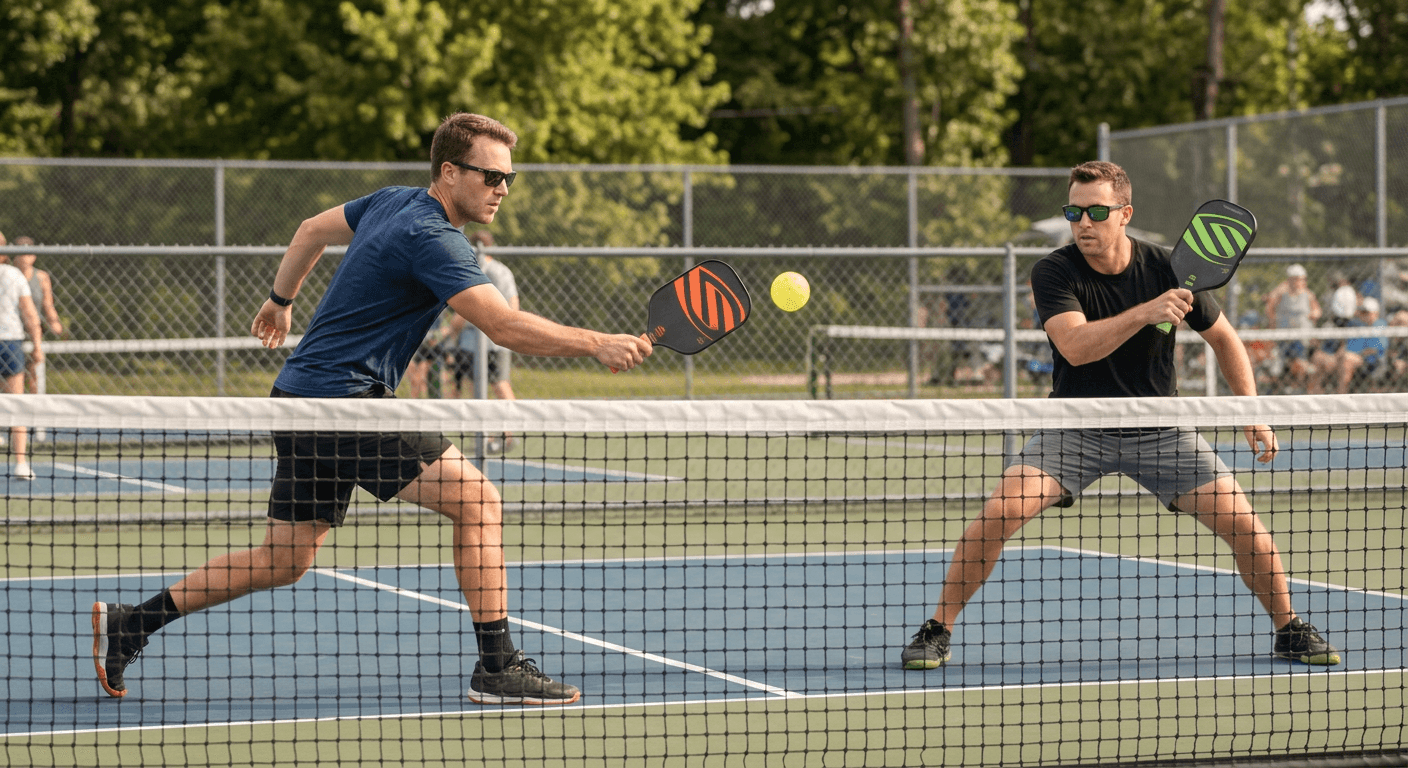
There is a player at my Wednesday session who I have never once beaten in a speed-up exchange at the kitchen. It used to frustrate me in a way that felt almost personal. My reaction time is fine. My paddle gets to most balls. But against this particular player the exchange is always over before I feel like I had a fair chance to respond. For a long time I told myself it was just reflexes, that some people are wired faster and that is the end of it.
Then I started actually watching him between speed-ups rather than during them. And what I noticed changed how I think about the whole concept of faster hands pickleball entirely. He is not reacting faster than me. He is set up better before the ball arrives. His paddle is already in a better position, his weight is already where it needs to be, and he has already read where the ball is going before it gets there. The speed is a byproduct. The preparation is the cause.
This article is about that distinction. What pickleball faster hands actually means at the kitchen line, why most players train for it in the wrong way, and what the preparation and positioning changes look like that actually make your pickleball hand speed faster in exchanges. I am not going to tell you to do more wall drills. There is a place for those and I will get to it. But the wall drill is the last piece, not the first.
What We Are Covering
1. What Faster Hands Actually Means and What It Does Not
When players talk about wanting faster hands at the pickleball kitchen they usually mean they want to react quicker when someone speeds up at them. The ball comes fast and they want to get their paddle there faster. That framing is not wrong exactly but it points the solution in the wrong direction. It implies the problem is reaction time, which is largely fixed for adults and not trainable to any significant degree through pickleball practice.
What is trainable, and what is actually driving the speed difference between players at the kitchen, is almost everything that happens before the reaction. Where the paddle is positioned. How tightly the handle is gripped. Whether the player has already read where the attack is going. Whether the player’s weight and stance allow them to move quickly. All of those things happen before the ball gets to you and all of them are trainable.
1.1. The Reaction Time Myth
There is research suggesting that elite athletes do not actually have faster raw reaction times than recreational athletes. What they have is better anticipatory skill, which means they gather information earlier in the movement sequence and make decisions before the event they are reacting to has fully occurred. A tennis player who appears to react impossibly fast to a 130mph serve is not reacting after the ball is struck. They are reading cues from the server’s body position, ball toss, and racket angle before contact happens. A large-scale meta-analysis reviewing over a hundred sports science studies confirmed that expert athletes hold a significant advantage in anticipatory skill rather than raw reaction time, and that this anticipatory ability is trainable through deliberate practice.
The same principle applies at the pickleball kitchen. The player who looks fast is usually the player who started moving earlier, not the player who moved faster once the ball was already in flight. That is a crucial distinction because starting earlier is a skill you can build deliberately. Moving faster once the ball is already past you is mostly physics.
1.2. What This Means Practically
It means the training for pickleball faster hands is less about reflexes and more about preparation habits. Ready position, grip pressure, paddle location between shots, reading opponent cues. Build those habits and your hands will look faster because they will be starting from a better position earlier in the sequence. That is the whole framework.
2. The Ready Position Problem Most Players Have
If you film yourself during a dink rally and watch what happens to your paddle between your shots you will probably see something uncomfortable. After each dink your paddle drops. Not all the way to your hip but lower than it should be, lower than optimal ready position for handling an incoming speed-up. By the time the speed-up arrives you are starting from a deficit.
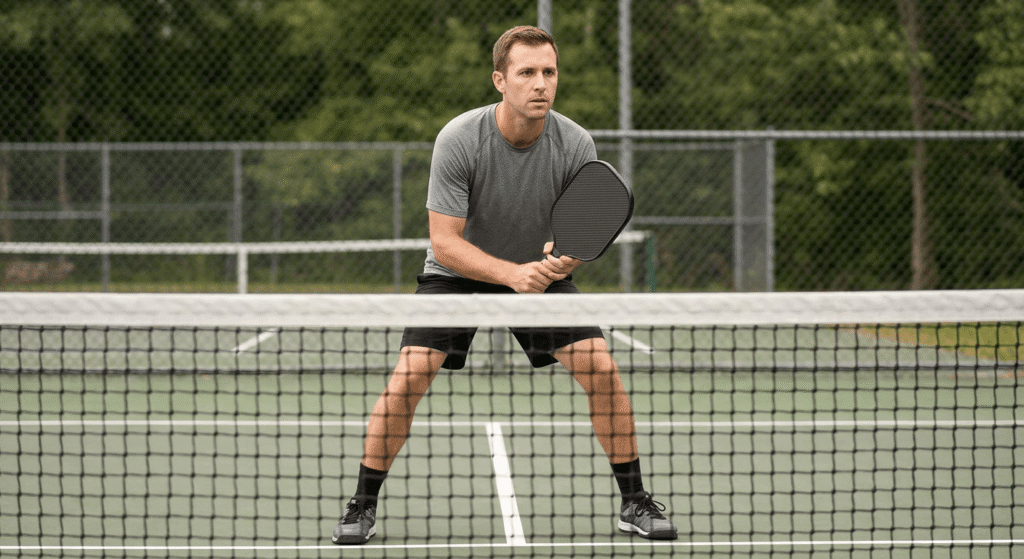
This is the single most common reason recreational players feel slow with pickleball hand speed at the kitchen and it has nothing to do with their reaction time. Their paddle is in the wrong place when the attack comes. The fix is not faster hands. It is a paddle that never drops in the first place.
2.1. Where the Paddle Should Be
Optimal ready position at the kitchen has the paddle face roughly centered in front of the body, somewhere between waist and chest height, with the face slightly open. Not raised dramatically high, that creates tension and limits movement range. Not dropped to hip level, that creates the deficit. Centered, loose, and ready to move in any direction from a neutral starting point. This position should be the default your paddle returns to after every single shot, not just when you think an attack might be coming.
The reason it needs to be the default rather than a deliberate choice is that speed-ups come faster than deliberate choices. If you only raise your paddle when you sense an attack coming you will be late. If your paddle is already there from habit you are never late.
2.2. The Drop Habit and How It Develops
The drop happens because players relax between their shots. You hit a dink, it goes where you wanted it, you mentally prepare for the next exchange and your arm drops slightly during that preparation. At 3.0 this does not cost you much because speed-ups are infrequent and not well-placed. At 3.5 and above it is a consistent vulnerability that good opponents will find and exploit. Building the habit of pickleball hand speed at the kitchen starts with not letting the paddle drop between shots, full stop.
3. Reading the Attack Before It Arrives
The second piece of the pickleball faster hands puzzle is anticipation. Specifically, reading your opponent’s body language and paddle position during the dink rally to pick up cues about when and where a speed-up is coming before it actually comes.
This sounds advanced but the cues are not subtle once you know what to look for. Most players telegraph their speed-ups in at least two or three ways before they execute. The paddle comes up slightly. The shoulder opens. The weight shifts forward. The wrist loads back. None of these are happening at the same time as the shot. They are happening a fraction of a second before it.
3.1. The Cues to Watch
Watch the paddle face more than the ball during dink rallies. The ball is going to arrive whether you watch it or not. The paddle face tells you what kind of ball is coming before it arrives. A paddle face that stays open and relaxed is going to produce a soft ball. A paddle face that closes slightly or drops before coming up is loading for a speed-up. That loading motion is your signal and it happens before contact.
Watch the opponent’s shoulder and hip position. A player who is going to speed up will almost always shift their weight or open their shoulder slightly before swinging. These are mechanical requirements of the shot, not deliberate signals. They happen whether the player intends them or not. Learning to read those pre-contact cues is what separates players who look psychic at the kitchen from players who look slow. Nobody is psychic. They just started reading earlier.
3.2. How to Practice Reading
You cannot drill this with a ball machine. You need a partner. Specifically, a partner who agrees to mix speed-ups into a dink rally at random and who gives you feedback afterward about which cues they noticed themselves giving before each one. Over four to six sessions of this kind of deliberate observation practice your ability to pick up pre-contact cues will improve noticeably. The first few sessions will feel like you are guessing. By session five or six you will start arriving early.
4. Grip Pressure and Why Loose Hands Move Faster
This is the piece of pickleball hand speed training that surprises most players when they first encounter it. Loosening your grip makes your hands faster. Not because of some abstract feel concept but because of straightforward biomechanics. A tight grip creates tension up the forearm and into the shoulder that restricts the speed and range of paddle movement. A loose grip keeps the kinetic chain free and allows the paddle to move faster in response to an incoming ball.
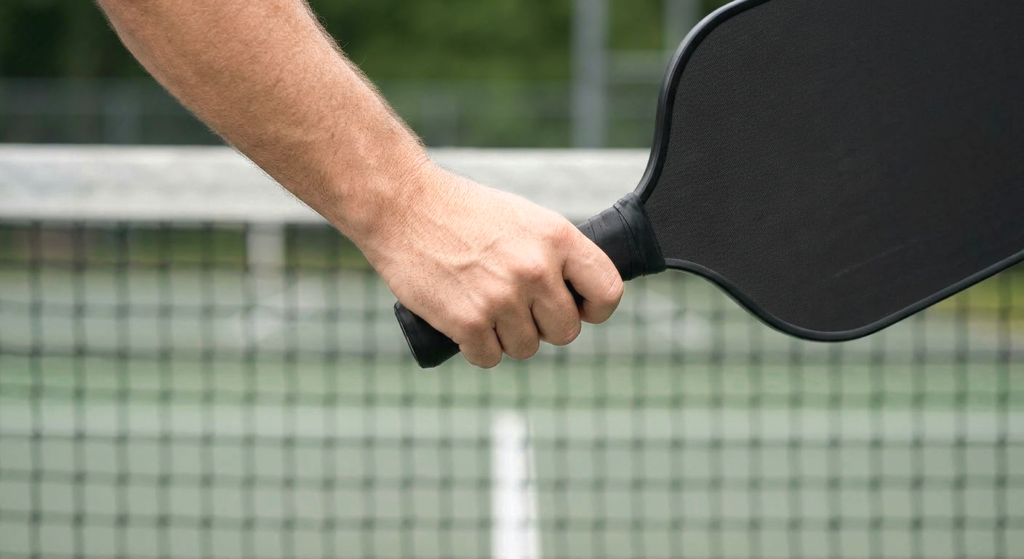
Try this the next time you are on court. During a dink rally consciously squeeze your grip as tightly as you can and try to volley a speed-up. Then loosen your grip until it feels almost uncomfortably relaxed and try again. The difference in paddle mobility is immediate and significant. The loose version moves faster to more balls with less effort.
4.1. Why Players Default to Tight Grips Under Pressure
Grip tightening under pressure is instinctive and nearly universal. When something fast comes at you the natural response is to clench. That clenching feels like control but it produces the opposite of control because it slows the paddle and reduces feel at contact. The players who handle speed-ups well at the kitchen have usually done enough pressure reps to override that clenching instinct and maintain a loose grip even when the ball is coming hard.
Overriding an instinct requires repetition under conditions that trigger it. Wall drills and partner feeds at pace are the right environment for this specifically because the incoming ball triggers the clenching response and gives you the chance to consciously relax through it. Ten minutes of this in every session is more useful for pickleball hand speed than an hour of casual dinking.
4.2. The Loose Grip Ready Position
Combine the grip pressure work with the ready position work from Section 2 and you have the physical foundation for faster hands pickleball training at the kitchen. Paddle centered in front of the body, face slightly open, grip loose enough that someone could pull the paddle from your hand with moderate effort. That is the starting point every shot should return to at the kitchen line. Not tense and raised. Not dropped and tight. Loose and centered.
5. Paddle Position Between Shots
Ready position is about where the paddle is when you are expecting to be attacked. Paddle position between shots is about what the paddle does during the microsecond after your own shot leaves it. This is where a lot of the pickleball hand speed problem actually lives and where most players never look.
5.1. The Follow Through Problem
Most players have a natural follow through that takes their paddle slightly off the centerline after they hit. A forehand dink follows through toward the right. A backhand follows through toward the left. That is normal and fine for the shot itself. The problem is what happens after the follow through. If the paddle stays off the centerline for even a quarter of a second the player is in a compromised position for the next ball.
Players with fast hands at the kitchen have short follow throughs that return to the centerline quickly. Not choppy mechanical shots, the follow through is natural on the shot itself. But the recovery from follow through to ready position is almost immediate. The paddle does not linger off center. It follows through and comes back. That recovery speed is trainable and it is different from reaction speed. It is a habit of the paddle’s path after contact, not a reflex.
5.2. Practicing the Recovery
Hit dinks with a partner and focus specifically on where your paddle is one second after contact, not during contact. If it is off the centerline more than a few inches you are slow to recover. Shadow swing at home without a ball focusing only on the recovery path. Paddle follows through naturally, then comes back to center before the next shot. Ten minutes of this shadow work per week over a month will noticeably shorten your recovery time in live play.
6. The Role of Anticipation Over Reaction
Everything in this article points back to the same central idea. Faster hands at the pickleball kitchen is mostly an anticipation problem, not a reflex problem. The players who look fast have gathered more information earlier in the sequence, positioned themselves better before the ball arrives, and started their response motion before most players have even registered that a ball is coming.
Anticipation is built through two things. Pattern recognition from enough repetitions that certain cues automatically trigger certain responses. And deliberate attention during play to the information sources that carry predictive value, opponent paddle face, shoulder position, weight shift, the things that happen before contact rather than during it.
6.1. Building Pattern Recognition
Pattern recognition is not something you can drill directly. It accumulates through volume of play combined with deliberate attention. The player who plays three hundred kitchen exchanges while actively watching for pre-contact cues will build pattern recognition faster than the player who plays three thousand exchanges while watching only the ball. The attention is what matters, not just the repetitions.
A simple practice habit that accelerates this. After every exchange at the kitchen where you were late, ask yourself one question. Where was my attention when the ball was struck. If the answer is on the ball rather than on the opponent’s body before the ball, you have identified exactly what to watch differently next time. That reflection loop is how pattern recognition gets built deliberately rather than accidentally.
6.2. The Confidence Factor
There is one more piece that is worth mentioning even though it is harder to train directly. Confidence at the kitchen under pace. Players who have handled a lot of fast balls in practice carry a baseline comfort with pace that players who have avoided it do not. That comfort manifests as relaxed grip, steady paddle position, and unhurried decision-making even when the ball is coming hard. The players who look coolest under pressure at the kitchen usually got there by spending time in uncomfortable practice situations rather than by having exceptional reflexes.
7. Drills That Actually Build Hand Speed
Now that the framework is clear the drills make more sense. These are ordered deliberately. The first two are about position and preparation. The last two are about pace and pressure. Do them in this order because building good habits before adding pace is what makes the pace training stick.
Drill 1: The Recovery Drill
Dink rally with a partner, no speed-ups. After every single shot consciously check your paddle position before the next ball arrives. Is it back at centerline? Is your grip loose? Is the face slightly open? Run this for ten minutes at the start of every kitchen session for three weeks. It will feel mechanical at first. By week three the recovery is automatic and you will stop noticing it because it has become the default.
Drill 2: The Cue Reading Drill
Dink rally with a partner. Your partner randomly speeds up at any point. Your job is not to block successfully, your job is to call out what cue you saw before the speed-up. Paddle came up, shoulder opened, weight shifted. After the exchange your partner confirms or corrects your reading. Run this for fifteen minutes. The first session you will miss most cues. By session four you will be calling them correctly more often than not.
Drill 3: The Wall Drill at Close Range
Stand two feet from a wall and drive the ball against it continuously, blocking each return. The pace is uncomfortable at this range. That discomfort is the point. It triggers the grip tightening instinct and gives you the repetitions to override it. Focus only on keeping your grip loose through each block. Run this for five minutes per session. It is harder than it sounds and more useful than any other single drill for building pickleball kitchen hand speed under real pressure conditions.
Drill 4: Live Speed Up Sets
Play points where one player is designated attacker and one is designated defender for the first five balls of each rally. The attacker speeds up at will. The defender works to reset and survive. Switch roles every five points. This puts the preparation habits you have built under live game pressure with a real opponent who is trying to beat you. The habits that hold up here will hold up in matches.
8. Putting It Together in Live Play
The gap between knowing this framework and feeling it work in a match takes time to close. The habits need enough repetitions to become automatic before they are reliable under pressure. Most players who go through this sequence see noticeable improvement in their pickleball kitchen hand speed within four to six weeks of consistent focused practice. Not because their reflexes changed. Because their preparation improved.
8.1. What to Focus on First
If you are going to take one thing from this article and apply it in your next session, make it the ready position. Paddle centered, grip loose, face slightly open, every single shot returned to that position before the next ball arrives. That one change will make you measurably faster at the kitchen before you have done a single drill because it removes the biggest deficit most players start from.
8.2. The Player at Wednesday Sessions
Going back to where this started. The player I never beat in speed-up exchanges. I watched him more carefully over the last few months with this framework in mind and the picture is exactly what I described above. His paddle never drops. His grip looks loose even when things get fast. He is watching shoulders and paddle faces, not just the ball. He is starting his response before most of us have registered that a ball is coming.
I still lose most of those exchanges. But I am losing them differently now. I am arriving later rather than not at all. That gap is closeable. The gap I thought I was dealing with, raw reaction time, was not. Faster hands at the kitchen are built through preparation, not through being born with better wiring. That means they are available to anyone willing to build the habits that underlie them. That is a much more useful thing to know.