
I played my first year of pickleball in running shoes. Not because I did not know better but because I genuinely thought it did not matter. They were comfortable. They were supportive. They cost a hundred and forty dollars. How bad could it be. The answer is that it was bad enough that I rolled my ankle during a casual Wednesday morning session and spent three weeks off the court thinking about what exactly went wrong.
What went wrong was that running shoes are built to go forward. Pickleball does not go forward. Pickleball goes sideways and backward and diagonally and then stops hard and goes sideways again. The best pickleball shoes for women are built for exactly that pattern of movement and running shoes are not. That is not a marketing claim. That is biomechanics. I had to learn it the painful way but you do not have to.
This article is not a product ranking. I am not going to list ten shoes and tell you which one to buy. What I am going to do is walk through what actually matters in a pickleball shoe for women specifically, why women’s feet have different needs than the generic unisex options suggest, and how to figure out which shoe is right for your game without wasting money on trial and error. Whether you are looking for the best pickleball shoes for women with wide feet or the best pickleball shoes for women with plantar fasciitis or just a reliable pair of court shoes that will protect your joints and let you move properly, this is the information you need before you shop.
1. Why the Best Pickleball Shoes for Women Are Not Just Smaller Men’s Shoes
This is the thing that frustrated me the most when I started looking for proper court shoes. So many options on the market are literally men’s shoes scaled down in size and offered in different colors. That is not a women’s shoe. That is a men’s shoe that fits a smaller foot. The shape is wrong. The support is wrong. The fit is wrong.
Women’s feet are structurally different from men’s feet in ways that matter for a lateral movement sport. Women generally have narrower heels relative to the forefoot. The arch profile is different. The angle from the hip through the knee to the ankle, what biomechanics people call the Q-angle, is wider in women because of wider hips. That wider angle puts more rotational stress on the knee during side-to-side movements, which is exactly what pickleball demands on every single point.
The best pickleball shoes for women account for these differences with a women’s-specific last, which is the mold the shoe is built around. A proper women’s last has a narrower heel cup to prevent slipping, a wider toe box to accommodate the forefoot, and midfoot support that matches a female arch profile. If the shoe you are looking at comes in men’s and women’s versions that look identical except for size and color, that is a red flag. The best pickleball shoes for women are designed from the ground up for a woman’s foot, not adapted from a men’s model after the fact.
1.1. The Running Shoe Problem
I already told you about my ankle. But the running shoe problem goes deeper than that. Running shoes have thick cushioned heels designed to absorb the impact of a forward stride. That thick heel raises your center of gravity and creates instability during lateral cuts. The soft mesh uppers that make running shoes breathable also make them collapse inward when you push sideways off your foot. Your foot literally slides inside the shoe while the outsole stays on the court. That is how ankle rolls happen.
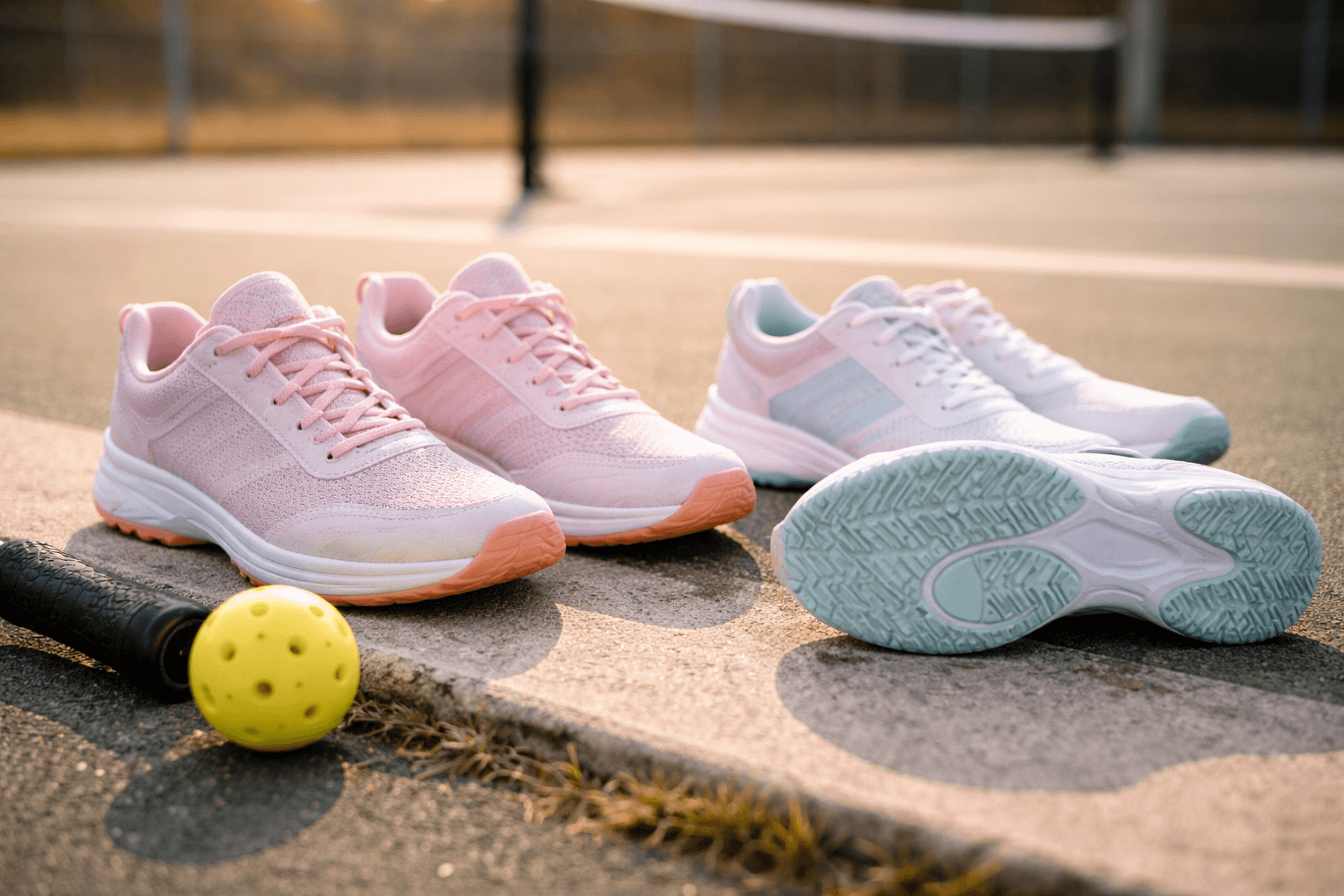
The best pickleball shoes for women have a low profile sole, rigid sidewalls, and a flat stable base that keeps your foot locked in place when you change direction. Running shoes have none of those things because running does not require any of those things.
1.2. Why Court Shoes and Pickleball Shoes Are Not Exactly the Same Either
Tennis shoes are a much better option than running shoes and for years they were the default for pickleball. They are still fine. But pickleball-specific shoes have started to differentiate in meaningful ways. Pickleball involves more short quick movements and less of the extended baseline sprinting that tennis requires. Pickleball shoes tend to be slightly lighter than tennis shoes, with more emphasis on quick lateral transitions and less on forward sprint cushioning. The outsole patterns are also optimized for the specific court surfaces pickleball is played on rather than the clay or hard court patterns tennis shoes are designed for.
If you already own good court shoes or tennis shoes you do not need to throw them away. They are significantly better than running shoes or casual sneakers. But if you are buying new, the best pickleball shoes for women are the ones designed specifically for how this sport actually moves.
2. What the Best Pickleball Shoes for Women Actually Do Differently
Once I started paying attention to shoes instead of just buying whatever felt comfortable in the store, I realized how much I had been missing. Good pickleball shoes do specific things that directly affect how you play. Here is what to actually look for.
2.1. Lateral Stability
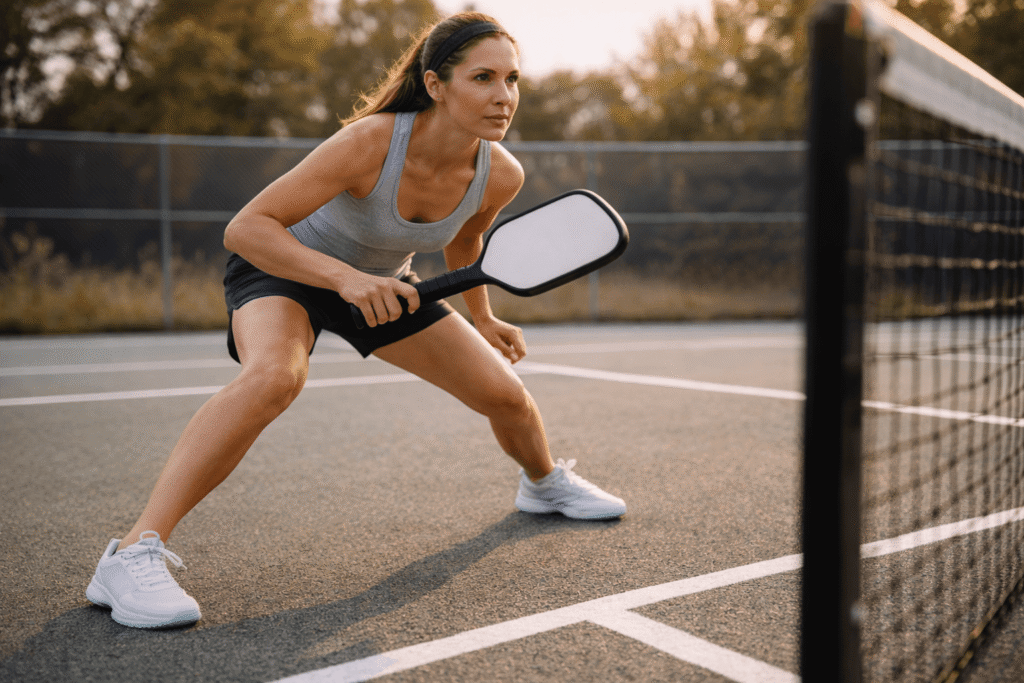
This is the most important feature in any pickleball shoe and it is the thing running shoes fail at completely. Lateral stability means the shoe resists rolling when you push off sideways. It comes from the outsole width, the sidewall stiffness, and how the shoe wraps around your foot. When you shuffle to the kitchen or lunge for a wide dink, your foot is pushing hard against the side of the shoe. If the shoe gives way you lose balance. If it holds you move cleanly.
I test lateral stability by standing in the shoe and pushing sideways off the ball of my foot. If I feel my foot sliding inside the shoe or the upper collapsing, that shoe is not stable enough for pickleball. The best pickleball shoes for women feel locked in during that test. Your foot and the shoe move as one unit.
2.2. Traction on Court Surfaces
Outsole traction is different for indoor and outdoor courts and this is something a lot of players do not think about when they are shopping. Indoor courts, typically wood gym floors, need a softer gum rubber outsole that grips the smooth surface. Outdoor courts, typically concrete or asphalt with a textured coating, need a harder more durable rubber that can handle the rougher surface without wearing down in a month.
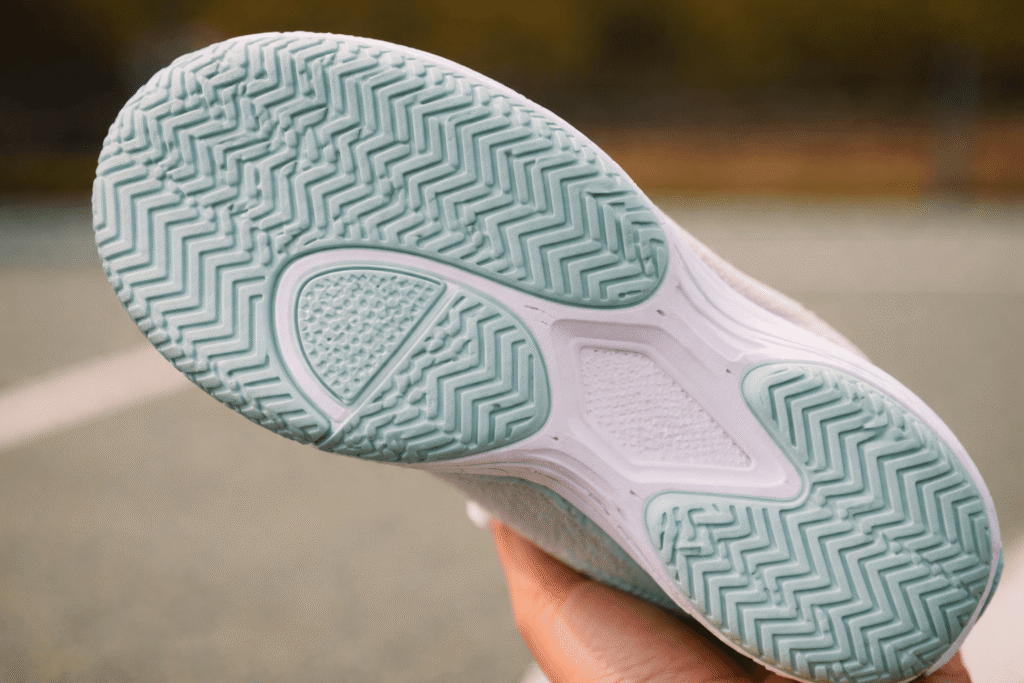
If you play on both surfaces, you need two pairs. I know that sounds annoying. It is also true. The best pickleball shoes for women who play indoor will slide dangerously on outdoor concrete. The best outdoor shoes will mark up and overdrag on indoor gym floors. One pair cannot do both well.
2.3. Cushioning That Does Not Compromise Stability
There is a tension in shoe design between cushioning and stability. More cushioning means more material between your foot and the ground, which raises your center of gravity and reduces court feel. Less cushioning means you feel the court better and stay lower but your joints take more impact over a three hour session.
The best pickleball shoes for women find a middle ground. Enough cushioning to protect knees and hips over long sessions, not so much that you feel disconnected from the court. I have found that shoes with a midsole height around twenty to twenty-five millimeters feel right. Below that and my knees complain after two hours. Above that and I start feeling unstable on quick direction changes.
2.4. Toe Protection and Durability
If you play with any intensity you drag your toes. On serves, on low volleys, on lunges. The front of your shoe takes a beating and if the material there is thin mesh it will wear through fast. The best pickleball shoes for women have reinforced toe caps or overlays that handle the abrasion without adding weight. Look at the toe area of any shoe you are considering. If it is the same thin mesh as the rest of the upper, expect holes within a few months of regular play.
3. Best Pickleball Shoes for Women with Wide Feet
This is personal for me because I have wider feet than most women’s shoes accommodate comfortably. For years I just dealt with the squeezing and the pressure points because I assumed that was how court shoes felt. It is not. I was just wearing shoes that did not fit my foot shape.
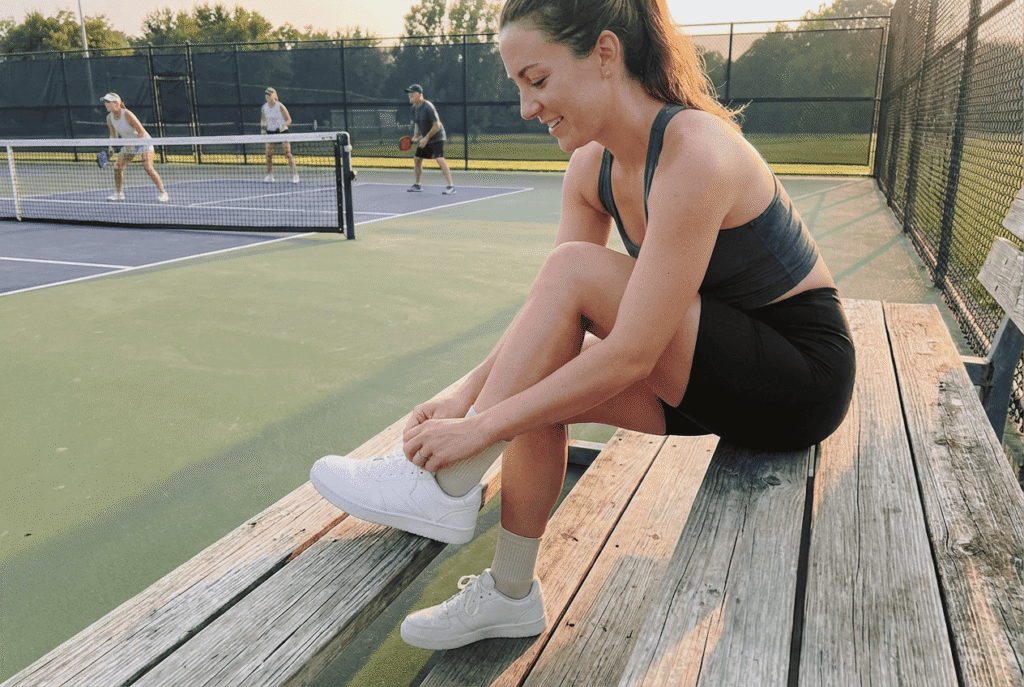
The best pickleball shoes for women with wide feet are shoes that actually come in wide width options, not just shoes that run large. A shoe that runs large is bigger everywhere, including areas where you need a snug fit like the heel. A wide option is wider in the forefoot where you need the room and still snug in the heel and midfoot where you need the security. Those are completely different solutions.
Several manufacturers now offer wide widths in their women’s court shoes and this has been a genuine improvement in the market over the last two years. If you have wide feet and you are currently playing in a standard width shoe that feels tight across the ball of your foot, try a wide version of the same shoe before switching to an entirely different model. The improvement is often dramatic.
A wide foot in a narrow shoe is not just uncomfortable. It restricts the natural splay of your toes during movement which reduces your balance and changes how force transfers through your foot on every step. The best pickleball shoes for women with wide feet fix that immediately and the difference in stability is something you feel on the first point.
4. Best Pickleball Shoes for Women with Plantar Fasciitis
I have not personally dealt with plantar fasciitis but I play regularly with three women who have and the shoe conversation comes up constantly. Plantar fasciitis is inflammation of the tissue that runs along the bottom of your foot from the heel to the toes. It produces a sharp pain in the heel that is worst in the morning and after periods of rest. Playing pickleball in shoes that do not support the arch properly makes it significantly worse.
The best pickleball shoes for women with plantar fasciitis need to do a few specific things. Strong arch support that prevents the plantar fascia from overstretching during movement. A slightly elevated heel-to-toe drop that reduces tension on the tissue. A firm midsole that does not collapse under load. And a heel cup that holds the foot in a neutral position rather than letting it roll inward.
One of my playing partners swears by adding an aftermarket orthotic insole to her pickleball shoes. She removes the stock insole and replaces it with one that has a deeper heel cup and more aggressive arch support. The combination of a good court shoe with a supportive insert has let her play pain-free after months of struggling. If you are dealing with plantar fasciitis and cannot find the best pickleball shoes for women with plantar fasciitis that solve the problem out of the box, custom or over-the-counter orthotics inside a good court shoe is the approach that seems to work best for the women I play with.
5. Indoor Versus Outdoor: Why the Best Pickleball Shoes for Women Depend on Where You Play
I made the mistake early on of wearing my outdoor shoes on an indoor court and I could not stop sliding. The harder rubber outsole that grips concrete perfectly has almost no traction on a polished gym floor. The reverse is also true. Gum rubber indoor soles wear down to nothing within weeks on outdoor concrete.
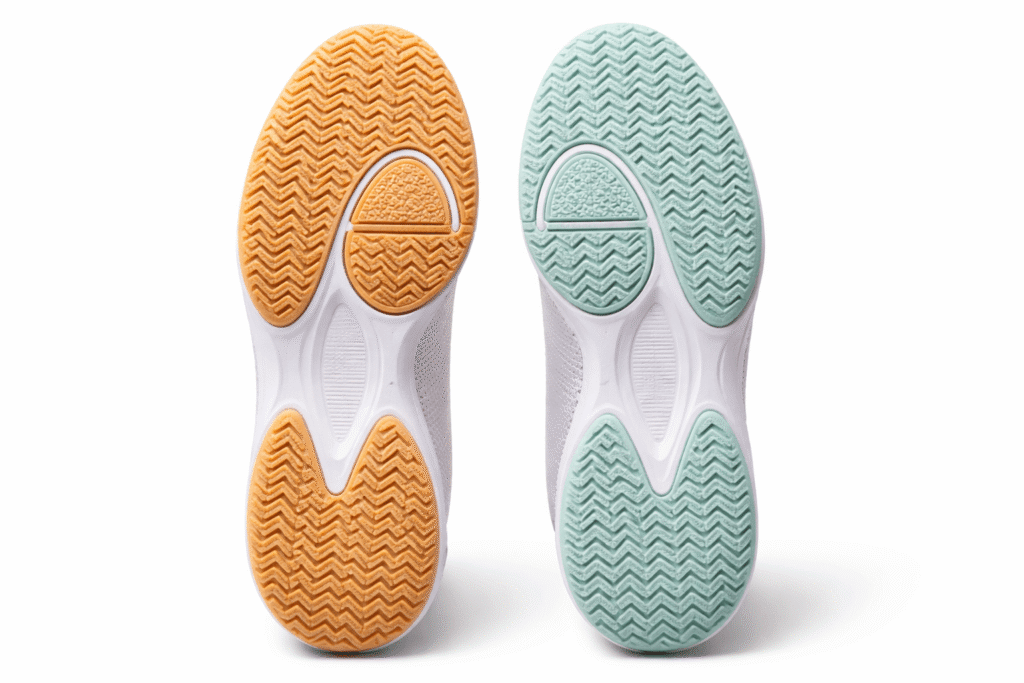
If you play primarily outdoors, which most recreational players in the US do, you want a shoe with a durable rubber outsole and a herringbone or modified herringbone tread pattern. These patterns are designed for the textured surfaces of outdoor courts and provide multidirectional grip without being so aggressive that they catch and trip you.
If you play primarily indoors, you want a shoe with a softer gum rubber outsole that creates friction against the smooth floor. These shoes are often lighter because indoor surfaces are easier on the shoe and you do not need the same level of reinforcement. The best pickleball shoes for women who play indoors will often feel noticeably lighter and closer to the ground than outdoor models.
If you split your time between both, invest in two pairs. I know it costs more upfront. It also means each pair lasts twice as long because they are only seeing half the use. And you are actually getting proper traction on both surfaces instead of compromising on one.
6. How to Tell If Your Current Shoes Are Holding You Back
Here is something I wish someone had told me earlier. You might not realize your shoes are a problem because you have been playing in them long enough that the limitations feel normal. Here are the signs that your shoes are actually affecting your game.
You feel unstable when you change direction quickly. You reach for a wide ball and your foot slides inside the shoe before the shoe moves. Your ankles feel sore after play even though you did not twist them. You notice wear patterns on the outsole that are uneven or concentrated in one area. Your toes feel cramped or numb after an hour. Your heel lifts slightly when you push off for a split step.
Any of those signals means your shoes are not doing their job. And here is the thing that is easy to miss: your body compensates for bad shoes without you realizing it. You take slightly shorter steps to avoid feeling unstable. You do not lunge as aggressively because your foot is not secure. You lose a fraction of a second on every movement because your feet are negotiating with the shoe instead of just moving. Those compensations add up over a session and over a season. You can check out coaching and strategy resources for new pickleball players for in-depth learning.
7. Fit and Sizing: What the Best Pickleball Shoes for Women Should Feel Like
Buying shoes online is convenient but it makes the fit question harder. Here is what I have learned about how pickleball shoes should fit, from making mistakes and from watching other women at my courts deal with fit issues.
7.1. Toe Room
You want about a half inch of space between your longest toe and the front of the shoe. Not more, not less. Too little and your toes jam on forward lunges. Too much and your foot slides forward, which creates blisters and reduces your control.
7.2. Heel Lock
Your heel should not lift when you push off. At all. Even a small amount of heel lift means the shoe is not secure and your foot is working harder to stay in place. If you try a shoe and your heel moves when you rise onto your toes, that shoe does not fit you regardless of how good the rest of it feels.
7.3. Midfoot Snug
The middle of the shoe should feel snug but not tight. This is where the lacing system matters. A shoe with a good lacing setup lets you dial in the midfoot tension without making the toe box too tight. If the shoe has a one-piece tongue or a bootie-style construction, pay extra attention to midfoot fit because you cannot adjust it as easily.
7.4. Measure Late in the Day
Your feet swell during the day. Measure them and try shoes in the afternoon or evening when they are at their largest. Wear the socks you plan to play in when you try shoes on. These are small things that prevent the problem of shoes that felt great in the store feeling tight on court.
8. How Long the Best Pickleball Shoes for Women Should Last
This depends entirely on how often and how hard you play. For someone playing three to four times a week at a competitive recreational level, most pickleball shoes last four to six months before the outsole traction and midsole cushioning degrade enough to notice. If you play once a week casually, a good pair can last a year or more.
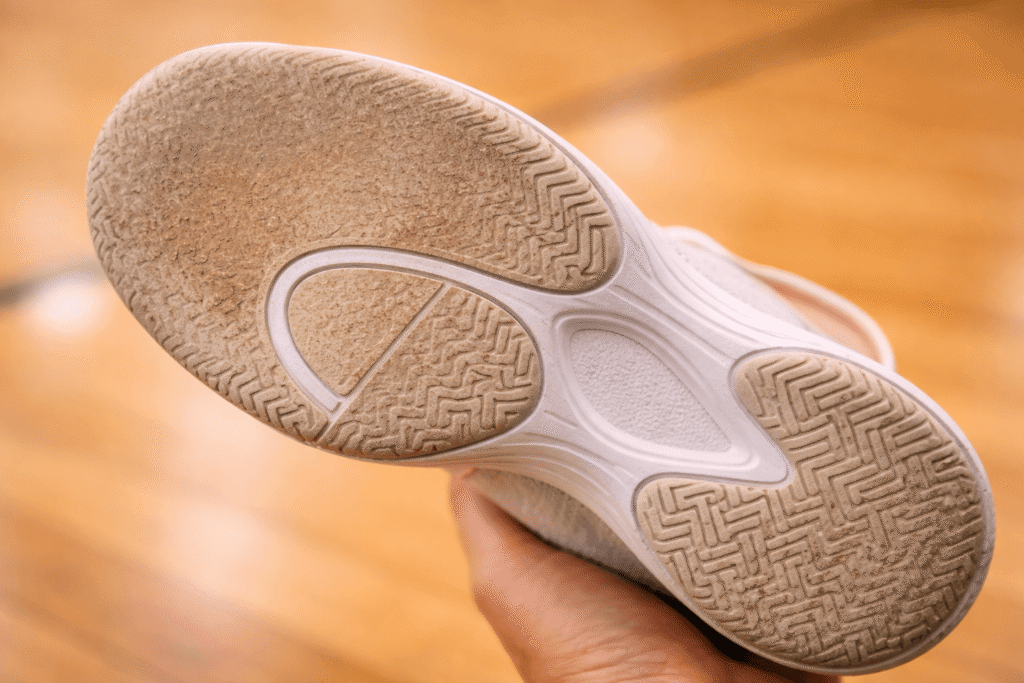
The first thing that goes is usually the outsole traction. The tread pattern wears smooth and you start slipping on movements that used to feel secure. The second thing is the midsole cushioning. The foam compresses over time and stops returning to its original shape. Your shoes feel flatter and your joints feel the difference after longer sessions. The third thing is the upper structure. The sidewalls lose their stiffness and the shoe starts to collapse inward on lateral movements.
When any of those things happens it is time for new shoes. Playing in worn out shoes is not saving money. It is borrowing against your joints and your ankles and eventually that bill comes due.
9. The Price Question: Do the Best Pickleball Shoes for Women Have to Be Expensive
No. But they cannot be cheap either. I have tried shoes at every price point and the floor where quality becomes acceptable is around sixty to seventy dollars. Below that you are getting materials and construction that will not hold up to the demands of the sport. The cushioning compresses too fast. The outsole wears through. The upper falls apart.
The sweet spot for the best pickleball shoes for women is between eighty and one hundred and forty dollars. In that range you get quality court shoe construction, proper lateral support, durable outsole rubber, and decent cushioning technology. You do not need to spend two hundred dollars. Some of the best shoes I have played in were under a hundred.
Above a hundred and fifty dollars you are usually paying for brand premium, aesthetics, or very specialized features that most recreational players do not need. Those shoes are lovely. They are not twice as good as the ninety dollar option. The returns diminish quickly at the top of the price range.
10. Breaking In New Shoes the Smart Way
Do not take brand new shoes to a competitive session on day one. I have made this mistake and watched other women make it and the result is always blisters and regret.
Wear new shoes around the house for a day. Then wear them for a casual hitting session. Then wear them for open play. By the third session the materials have flexed and molded to your foot shape and you know whether there are any hot spots or pressure points. Some shoes require no break-in at all. Others need a week. You will not know until you give them time.
If a shoe is still causing discomfort after three sessions of play, it probably does not fit your foot. That is not a break-in issue. That is a fit issue. Return it and try something else. The best pickleball shoes for women feel good quickly. They should not require weeks of suffering before they become tolerable.
11. What I Tell My Playing Partners When They Ask About Shoes
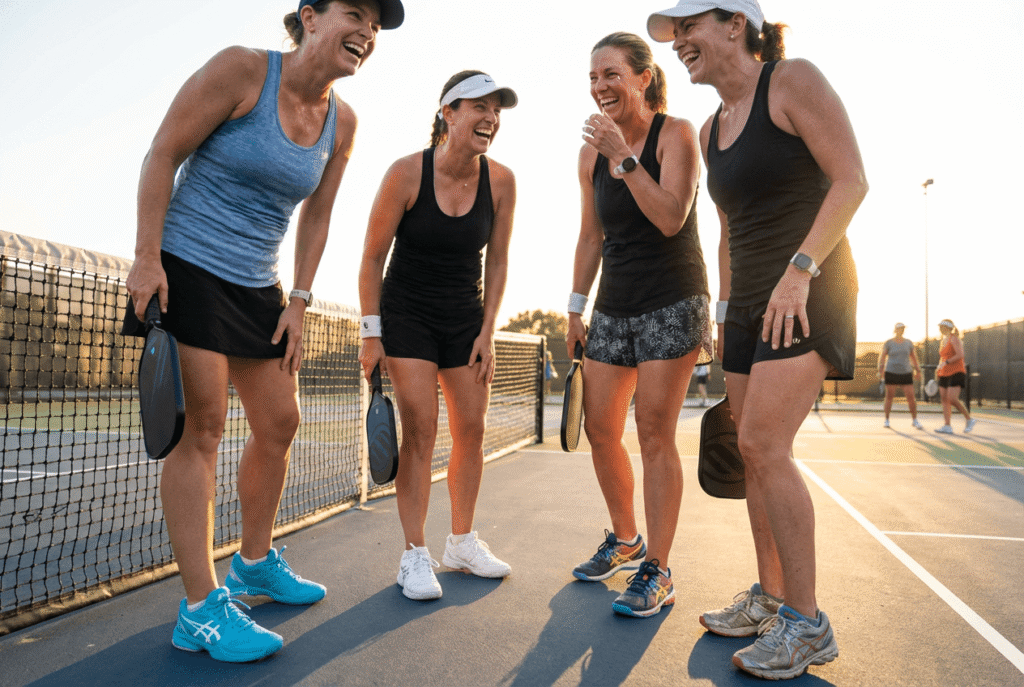
The question comes up a lot, especially from women who are new to the sport or who have been playing in running shoes and are starting to feel the consequences. My answer is always the same. Get a real court shoe. Ideally one designed for pickleball. Make sure it is a women’s-specific model, not a scaled-down men’s shoe. Try it on in the afternoon with your playing socks. Check the heel lock, the midfoot snug, the toe room. And if you have wide feet or plantar fasciitis, address those issues specifically rather than hoping a generic shoe will work.
The best pickleball shoes for women are the ones that disappear on your feet. You do not think about them during a game. You do not adjust them between points. You do not favor one foot over the other because something hurts. They just let you move the way the game asks you to move, and you forget they are there entirely.
That is what good shoes do. They get out of the way. And when they get out of the way you play better because your feet are doing their job instead of fighting the thing that is supposed to help them do it.
Your paddle gets all the attention. Your shoes do more work. Take them seriously.