
I have tested somewhere north of forty paddles in the last three years. Some of them were sent to me. Most of them I bought with my own money, which my wife has opinions about. I have played with paddles that cost thirty dollars and paddles that cost two hundred and sixty dollars and I have played with everything in between. I am telling you this upfront because I want you to understand that what follows is not theoretical. This is what I have actually found after putting real hours on real courts with real paddles, session after session, for a long time.
Finding the best pickleball paddles is not as simple as looking at a ranking list and buying whatever sits at the top. I tried that approach early on and it cost me money and time. What works beautifully for someone else might feel completely wrong in your hand because your game is not their game. Your swing is not their swing. The shots you rely on are not the shots they rely on. That is not a minor detail. That is the whole point.
This article is going to walk through what I have learned about choosing the best pickleball paddles across different skill levels and playing styles. I am going to talk about what actually matters in a paddle, what is marketing noise, and how to narrow down your options without going through the expensive trial and error cycle that I went through. If you are looking for the best pickleball paddles for intermediate players who are trying to level up, or the best pickleball paddle for spins because you want to add that weapon to your game, or the best pickleball paddles for advanced players who need something precise and specialized, this article covers all of it. No rankings. No affiliate nonsense. Just what I have found to be true.
Table of Contents
1.Why the Best Pickleball Paddles Are Not What Most People Think They Are
There is a version of this article that lists ten paddles in order and tells you to buy the first one. I am not writing that article because that approach does not work. I have watched too many players buy a top-rated paddle and then wonder why their game did not change. The answer is almost always the same. The paddle was excellent. It was just excellent for a different type of player.
The best pickleball paddles are defined by fit, not by some absolute quality scale. A head-heavy paddle with a thick core and a fiberglass face is a fantastic paddle for someone who drives the ball from the baseline and needs pace on their shots. That same paddle is a terrible choice for someone who plays a soft, patient game at the kitchen line and needs feel above everything else. Both of those players can spend the same amount of money and end up with paddles that serve completely different purposes. Neither paddle is better. They are better for different people.
I had to learn this the hard way. About two years ago I bought a paddle that was getting incredible reviews from power players. The drives off this thing were genuinely impressive. I could feel the difference immediately. But my game is not built around driving. I win points at the kitchen. I win points with resets and drops and placement. That paddle fought me on every soft shot I tried to hit because it was not built for soft shots. It was built for people who wanted to hit through other people. I am not that player. The paddle was great. It was great for someone else.
Understanding this is the first step toward actually finding the best pickleball paddles for your specific game. Stop asking what the best paddle is. Start asking what the best paddle is for what you do on the court.
1.1. The Myth of the Perfect All-Around Paddle
You will hear paddles described as great all-around options. I use that language myself sometimes and it is not wrong exactly, but it is incomplete. All-around means the paddle does nothing badly but it also means the paddle does nothing exceptionally. For a player who is still developing their game and does not know what their strengths are yet, an all-around paddle is a reasonable starting point. For a player who knows exactly what they need, all-around is another way of saying the paddle does not specialize in the thing you actually want it to do.
The best pickleball paddles for players who have identified their style are almost always somewhat specialized. Not extreme. Not a paddle that can only do one thing. But a paddle that leans into the areas that matter most to your game. That lean is what makes the difference between a paddle that works and a paddle that works for you.
2. What Separates the Best Pickleball Paddles from Average Ones
I have held enough paddles to know that the differences between them are real but they are also smaller than the marketing suggests. A two hundred dollar paddle and a ninety dollar paddle from the same era of manufacturing are not two hundred percent different. They might be fifteen percent different. Sometimes less. But that fifteen percent matters if it shows up in the area of the game where you need it most. You can also read the USA Pickleball Equipment Standards Manual for detailed information.
2.1. Core Thickness and What It Means for Your Game
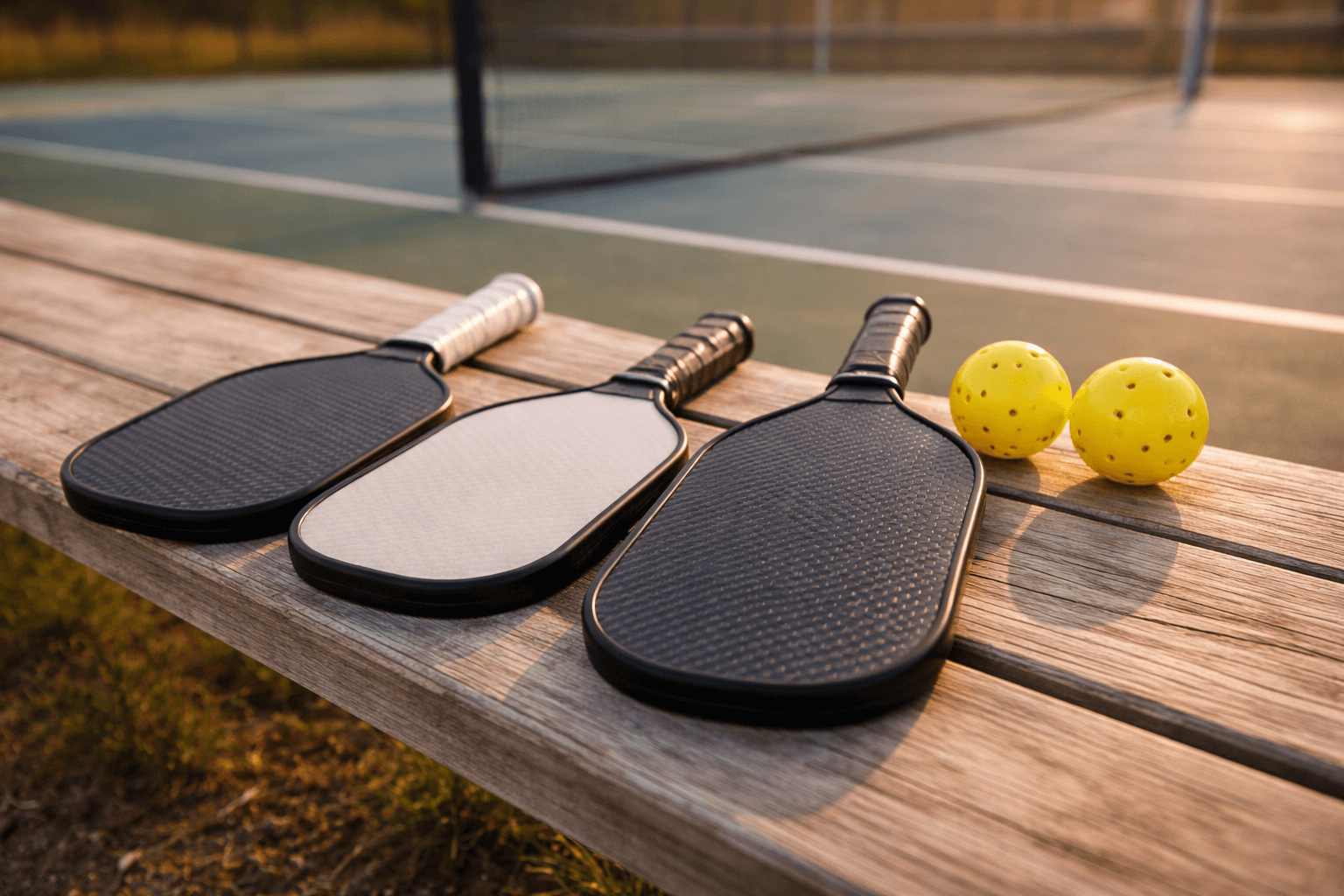
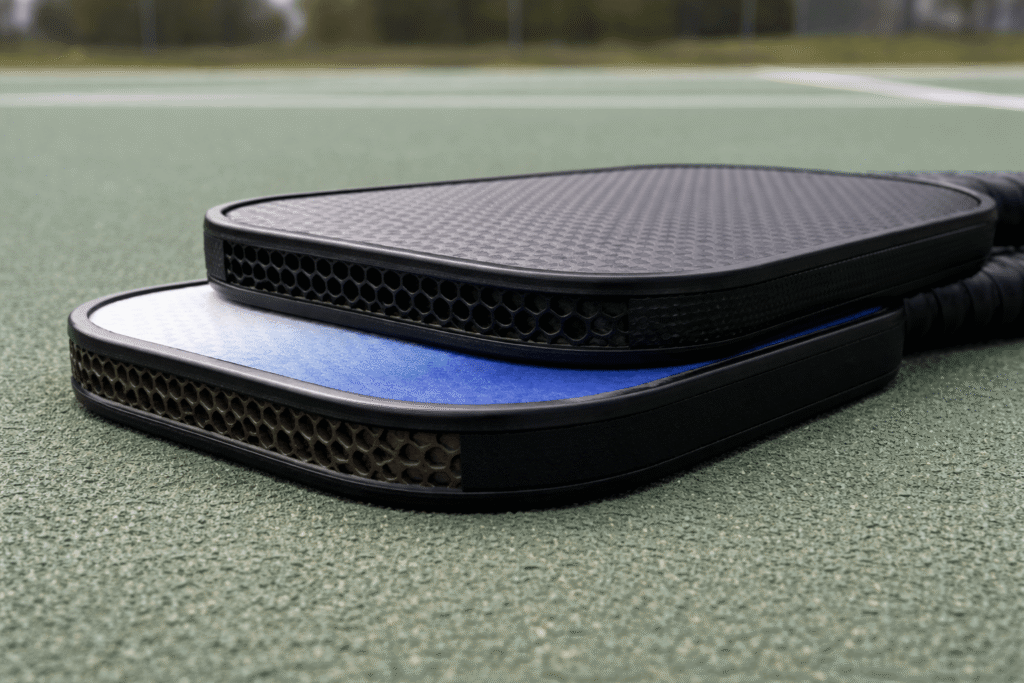
Most of the best pickleball paddles on the market right now use a polymer honeycomb core. That is table stakes at this point. What varies is the thickness. Thicker cores, typically sixteen millimeters, give you a bigger sweet spot and more power. Thinner cores, thirteen or fourteen millimeters, give you more feel and better control on touch shots. This is not a subtle difference. I played with a sixteen millimeter core for three months and then switched to a fourteen millimeter from the same manufacturer and the feel on my dinks changed immediately. More feedback. More precision. Less pop on drives but I was willing to make that trade.
The best pickleball paddles for intermediate players tend to do well with a sixteen millimeter core because the larger sweet spot is forgiving on off-center hits. At the intermediate level your contact point is still inconsistent enough that forgiveness matters more than optimization. For advanced players who have consistent contact, the thinner core becomes viable because you are actually making clean contact often enough to benefit from the additional feel.
2.2. Face Material and the Spin Question
Face material is where the conversation around the best pickleball paddle for spins really starts. Carbon fiber faces, particularly raw or unfinished carbon fiber, create a textured surface that grips the ball at contact. That grip translates directly into spin. Fiberglass faces offer a different feel, generally more flex and more pop, but they do not generate spin the same way.
I noticed this in my own game when I switched from a fiberglass face to a raw carbon fiber face about a year ago. My topspin drives started kicking harder after the bounce. My sidespin serves started moving more. The difference was not subtle. If you are serious about finding the best pickleball paddle for spins, the face material is not negotiable. You want raw carbon fiber. Full stop.
What I will add, because I think it is important, is that surface texture degrades over time. The best pickleball paddle for spins when it is new might not be the best pickleball paddle for spins eight months later when the face has been worn smooth by thousands of ball contacts. I clean my paddle face regularly and it helps, but the texture does wear down. Keep that in mind when evaluating how a paddle performs over its lifetime, not just out of the box.
2.3. Weight and Balance
Paddle weight gets discussed constantly but weight distribution gets overlooked and it matters more. Two paddles that both weigh 7.8 ounces can feel completely different depending on where the weight is concentrated. Head-heavy paddles generate more power on swings because of the momentum at the point of contact. Handle-heavy or balanced paddles feel more maneuverable and give you faster hand speed at the net.
For anyone searching for the best pickleball paddles, I would pay more attention to balance point than total weight. You can always add lead tape to change weight. Changing balance is harder. The best pickleball paddles for advanced players often come with deliberate balance points that match specific playing styles, and many advanced players fine-tune with lead tape from there.
3. Best Pickleball Paddles for Intermediate Players: What You Actually Need Right Now
I remember being an intermediate player. It was not that long ago. The defining characteristic of that stage for me was that I knew what I wanted to do but I could not do it consistently. My third shot drop was good three times and bad twice. My drives had pace sometimes and sailed long other times. I understood court positioning in theory but my feet did not always agree. If that sounds familiar you are probably intermediate and the paddle you choose right now matters more than you think, but not for the reasons you think.
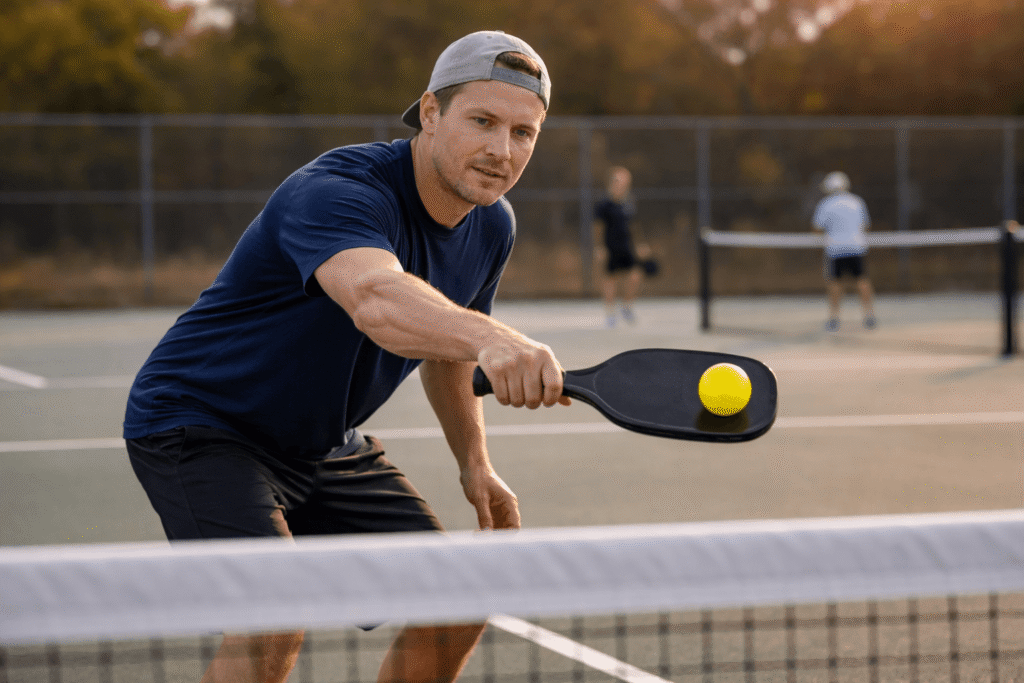
The best pickleball paddles for intermediate players are not the best paddles overall. They are the paddles that support the phase of development you are in right now. At the intermediate level you need three things from a paddle. Forgiveness for inconsistent contact. Enough versatility that you are not locked into one style of play while you are still figuring out your style. And a weight that you can sustain for two or three hours without your arm falling off.
I see intermediate players make the same mistake repeatedly. They buy what the 5.0 player at their club uses. That player has spent years developing mechanics that allow them to extract performance from a specialized paddle. An intermediate player using that paddle is like someone who just got their license driving a race car. The car is fast. The driver is not ready for it. The best pickleball paddles for intermediate players prioritize forgiveness over raw performance because forgiveness keeps you playing and learning while raw performance punishes you for mistakes you have not learned to avoid yet.
3.1. The Forgiveness Factor
Forgiveness in a paddle comes from two places. Sweet spot size, which is influenced by core thickness and face size. And weight distribution, which determines how much an off-center hit costs you. The best pickleball paddles for intermediate players tend to have a sixteen millimeter core, a standard or slightly elongated shape, and a balanced weight distribution. That combination gives you the most room to be imperfect while you work on becoming more consistent.
I played with what I would call a forgiving intermediate paddle for about eight months during a period when I was actively working on my third shot drop consistency. That paddle did not have the best feel. It did not generate the most spin. It did not drive the hardest. But it let me hit a lot of drops without punishing me when my contact point drifted. By the time I moved to a more specialized paddle my drop was reliable enough that I did not need the forgiveness anymore. The best pickleball paddles for intermediate players are transitional tools. They are meant to get you to the next level, not to be the last paddle you ever buy.
3.2. Avoiding the Premature Upgrade
Here is what I wish someone had told me when I was intermediate. Do not buy a paddle based on what you want your game to become. Buy a paddle based on what your game is right now. Your game will change. Your paddle needs will change with it. But buying a paddle for the player you hope to be in a year means playing with a paddle that does not match the player you are today. The best pickleball paddles for intermediate players meet you where you are, not where you are going.
4. Best Pickleball Paddle for Spins: What I Have Found That Actually Works
Spin changed my game more than any other single development over the past two years. When I started deliberately working on spin, my serve became a weapon instead of a formality. My drives started dipping instead of sailing. My dinks started dying instead of sitting up. If you are not actively developing spin you are leaving one of the most effective tools in modern pickleball on the table.
But here is the thing I had to learn through expensive experimentation. You cannot generate elite-level spin with just any paddle. Technique matters enormously. But the paddle has to cooperate. The best pickleball paddle for spins starts with the surface and builds from there.
4.1. Surface Texture Is Not Negotiable
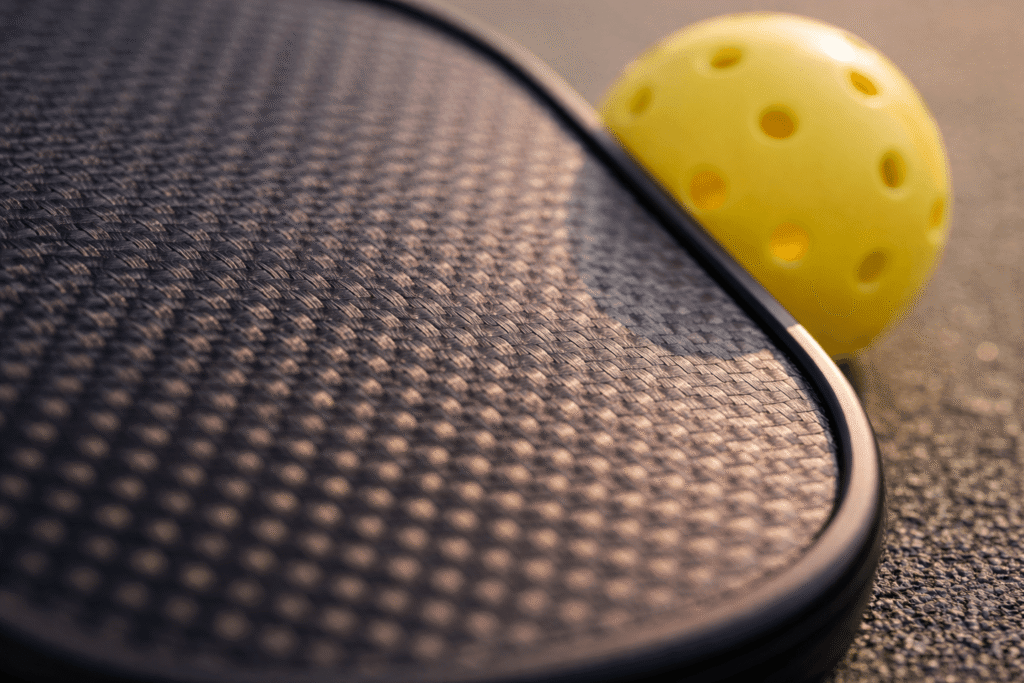
I said this above and I am saying it again because it is the single most important factor in a spin paddle. Raw carbon fiber faces grip the ball in a way that smooth or coated faces simply cannot replicate. The micro-texture on an unfinished carbon fiber surface creates friction at the point of contact and that friction is what generates rotation. When I switched to a raw carbon face the change in my spin numbers was not incremental. It was significant. Balls that used to skid straight started kicking sideways. Topspin drives that used to bounce predictably started jumping. The surface does that. Not technique alone.
If you are looking for the best pickleball paddle for spins and the paddle you are considering has a smooth, glossy, or heavily coated face, keep looking. I do not care how good the rest of the paddle is. Without that surface texture you are fighting physics on every spin shot.
4.2. Shape and Swing Speed
The best pickleball paddle for spins tends to be slightly elongated. The longer lever arm allows for more head speed through the ball, which is a critical variable in spin generation. You need that whip through the contact zone. A wider, shorter paddle has a bigger sweet spot but it does not accelerate through the ball the same way.
I found the sweet spot, no pun intended, to be around 16.4 to 16.5 inches in length. Long enough to generate head speed and reach balls I would otherwise miss. Not so long that the sweet spot becomes tiny and every mishit punishes me. The best pickleball paddle for spins balances length with usability. Going to an extreme elongation will generate more spin on perfect contact but it will also generate more errors on imperfect contact. For most players that trade is not worth it.
4.3. Weight for Spin Generation
Lighter paddles allow faster swing speeds and faster swing speeds generate more spin. This is basic physics. But there is a floor. Go too light and you lose stability at contact, which actually reduces spin because the paddle deflects instead of driving through the ball. For spin-focused play I have found that 7.4 to 7.9 ounces is the range where you get enough swing speed without sacrificing stability. The best pickleball paddle for spins sits somewhere in that window depending on your strength and swing mechanics.
Something I do not see discussed often enough is that weight affects spin differently on different shots. A lighter paddle helps generate topspin on drives because you can whip the head through quickly. But on spin serves where you want a heavier contact to really bite into the ball, a slightly heavier paddle might actually produce more rotation. The best pickleball paddle for spins is a compromise between these two situations and where that compromise lands depends on which spin shots matter most to your game.
5. Best Pickleball Paddles for Advanced Players: Precision Over Forgiveness
Advanced players do not need me to tell them what a paddle does. They pick one up and know within five minutes whether it matches their game. What advanced players sometimes need, and I include myself in this, is a framework for thinking about paddle selection that goes beyond feel and gut instinct. Because feel can be misleading. The novelty effect does not spare anyone regardless of skill level.
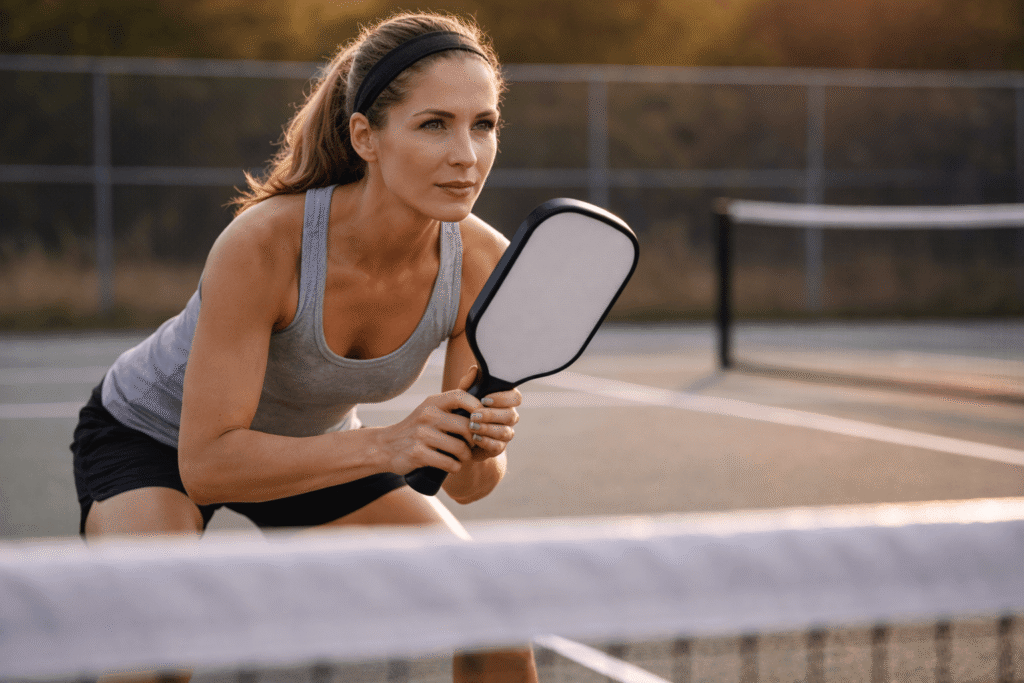
The best pickleball paddles for advanced players are specialized. Not gimmicky. Specialized. There is a difference. A gimmick is a feature that sounds good in marketing but does not translate to measurable on-court performance. A specialized feature is one that makes a specific type of shot meaningfully better at the cost of something else. Advanced players know what they are willing to give up. That clarity is what makes specialized paddles work for them and not for intermediate players.
5.1. Core Thickness at the Advanced Level
This is where the sixteen versus thirteen or fourteen millimeter debate actually matters. At the advanced level your contact is consistent enough that core thickness differences express themselves reliably. If you play a control game built around dinks, drops, and resets, a thinner core will give you the feel you need to place balls precisely. If you play a power game built around drives and put-aways, a thicker core gives you the pop and sweet spot size to be aggressive. The best pickleball paddles for advanced players come in multiple core options specifically because advanced players know which one they need.
I have settled on a fourteen millimeter core for my own game because my game is built around the soft stuff. I give up some pop on drives and I am fine with that because the feel I get on my resets and drops is worth the trade. That is a personal decision based on my playing style. A different advanced player with a different game should make a different decision. The best pickleball paddles for advanced players are the ones that match the game you have actually built, not the game you play occasionally.
5.2. Thermoformed Construction
Thermoformed paddles have been the biggest shift in paddle construction in the last couple of years. The process fuses the edge of the paddle creating a more rigid structure that extends the effective hitting area closer to the perimeter. For advanced players who play fast-hands exchanges at the kitchen where contact is not always in the center of the face, that extended performance zone is a real advantage.
I have played with several thermoformed paddles and the difference is noticeable on off-center hits. Shots that would have died or sprayed off a traditional construction feel cleaner and more predictable. The best pickleball paddles for advanced players who play aggressive net games are increasingly thermoformed because the construction directly supports what those players do most often.
5.3. Customization and Lead Tape
Here is something that separates how advanced players approach paddle selection from everyone else. Most advanced players do not play a paddle stock. They add lead tape to dial in the balance. A gram or two at the head for more power. A gram or two at the handle for more maneuverability. Some players add tape at the three and nine o’clock positions for stability on off-center hits. The best pickleball paddles for advanced players are often ones that respond well to customization, paddles that provide a solid base and then let the player fine-tune from there.
I run about three grams of lead tape at the throat of my paddle for a slight handle-heavy balance that improves my hand speed at the net. That is specific to my game. The point is not to copy what I do. The point is that the best pickleball paddles for advanced players are starting points, not finished products. If you are playing at an advanced level and you have never experimented with lead tape placement, you are leaving easy performance gains on the table.
6. How to Actually Test the Best Pickleball Paddles Without Wasting Money
Here is where most people go wrong. They read reviews, watch videos, pick a paddle, buy it, and hope for the best. Sometimes it works out. Usually it does not because choosing the best pickleball paddles requires putting them in your hand on a real court, not reading about how they felt in someone else’s hand.
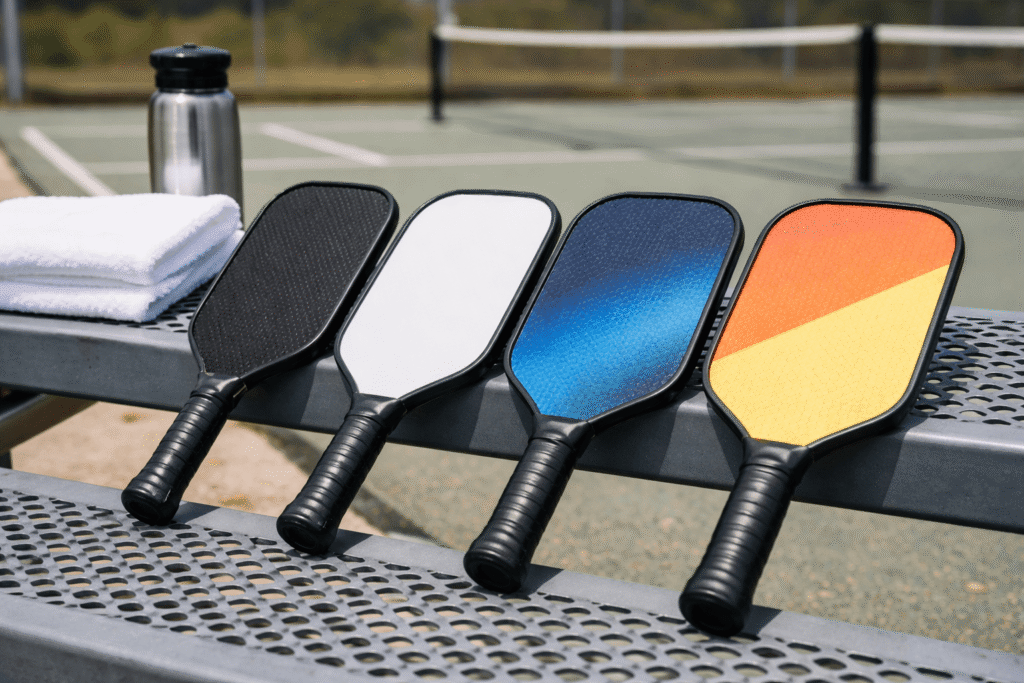
6.1. Demo Programs Are the Smartest Money You Can Spend
Most major manufacturers now run demo programs. You pay a small fee, they send you two or three paddles, you play with them for a week or two, and you send them back. If you buy one they usually credit the demo fee. This is far and away the best way to find the best pickleball paddles for your game without committing two hundred dollars to a guess. I wish I had used demo programs earlier. It would have saved me several hundred dollars in paddles that ended up sitting in my garage.
6.2. Give Each Paddle at Least Three Weeks
Do not evaluate a paddle based on one session. The first session with any new paddle is contaminated by novelty. Everything feels different. Different can feel good even when it is not actually better. Give each paddle at least three weeks of regular play before you form an opinion. By week three the novelty has worn off and you are experiencing the paddle for what it actually is.
6.3. Test Every Shot Not Just the Fun Ones
When I test paddles I make myself hit at least fifty dinks, fifty drives, thirty drops, and twenty resets before I form any opinion. Most players hit drives and serves during a test because those shots feel good and are easy to evaluate. But the shots that win games at the competitive level are the boring ones. The best pickleball paddles feel right on the soft shots too. If a paddle feels great on your drive but dead on your dink, that paddle has a problem that will show up in games. Test everything.
7. Common Mistakes I Have Made and Seen Others Make When Choosing the Best Pickleball Paddles
I am including this section because every mistake on this list is one I have made personally or watched someone at my courts make repeatedly. If I can keep you from making even one of them this article was worth writing.
Buying based on what a professional player uses. Pro paddles are often custom tuned with specifications that do not match the retail version. The pro’s name is on it. The pro’s specs are not. Beyond that, professional players have mechanics that allow them to extract performance from paddles designed for their specific game. Your game is not their game. The best pickleball paddles for you are not the ones with a pro’s face on the marketing material.
Switching paddles after a bad day. Everyone has bad days. If you switch paddles after every frustrating session you will never develop consistency with anything. I committed to six months with one paddle and my game improved more during that stretch than during any period of frequent switching. Stay with a paddle long enough to know whether it is actually the problem or whether you are having a normal variation in your game.
Ignoring weight because the difference seems small. The difference between 7.3 ounces and 8.1 ounces does not sound like much. Play for three hours and your shoulder will explain why it matters. I have played with paddles that felt perfect for thirty minutes and felt like anchors after ninety. The best pickleball paddles are ones you can swing at full effort for as long as you play.
Not replacing grip tape often enough. This is not a paddle selection issue exactly but it affects how every paddle feels in your hand. Worn grip tape changes your hold, increases fatigue, and reduces feel. I replace mine every three to four weeks during heavy play periods. It costs a few dollars and it changes how the paddle performs more than most people realize.
8. Price and the Best Pickleball Paddles: Where the Value Actually Lives
I have played with paddles across the entire price range and here is what I can tell you. Below about sixty dollars you are generally getting materials and construction that will hold you back. Above about one hundred and eighty dollars you are generally paying for branding, cosmetics, and marginal improvements that most players cannot feel. The best pickleball paddles for the majority of players live in the eighty to one hundred and sixty dollar range.
That range covers paddles with quality polymer cores, carbon fiber or fiberglass faces, solid construction, and thoughtful design. You do not need to spend two hundred and fifty dollars to get a great paddle. You might need to spend two hundred and fifty dollars to get the exact paddle a particular pro uses with their name on it, but you do not need that paddle. What you need is a paddle built with good materials that matches your game. Those exist at every price point within that range.
The best pickleball paddles I have tested were not the most expensive ones. One of my current favorites was under a hundred and twenty dollars and it plays as well as paddles I have tested that cost twice that. Materials and manufacturing have improved across the industry to the point where mid-range paddles today are genuinely excellent. The premium you pay above that range buys you something, but what it buys you gets smaller the higher you go.
9. Matching the Best Pickleball Paddles to How You Actually Play
Everything in this article comes down to this. Your paddle has to match your game. Not someone else’s game. Not the game you want to have in six months. Your game right now, today, the one you bring to the court every time you play.
If you are a power player who wins with pace and drives, the best pickleball paddles for your game are heavier with fiberglass faces and thicker cores. You want mass behind your shots and a face that flexes into the ball for pop. These paddles will not give you great feel on soft shots. That is the trade-off.
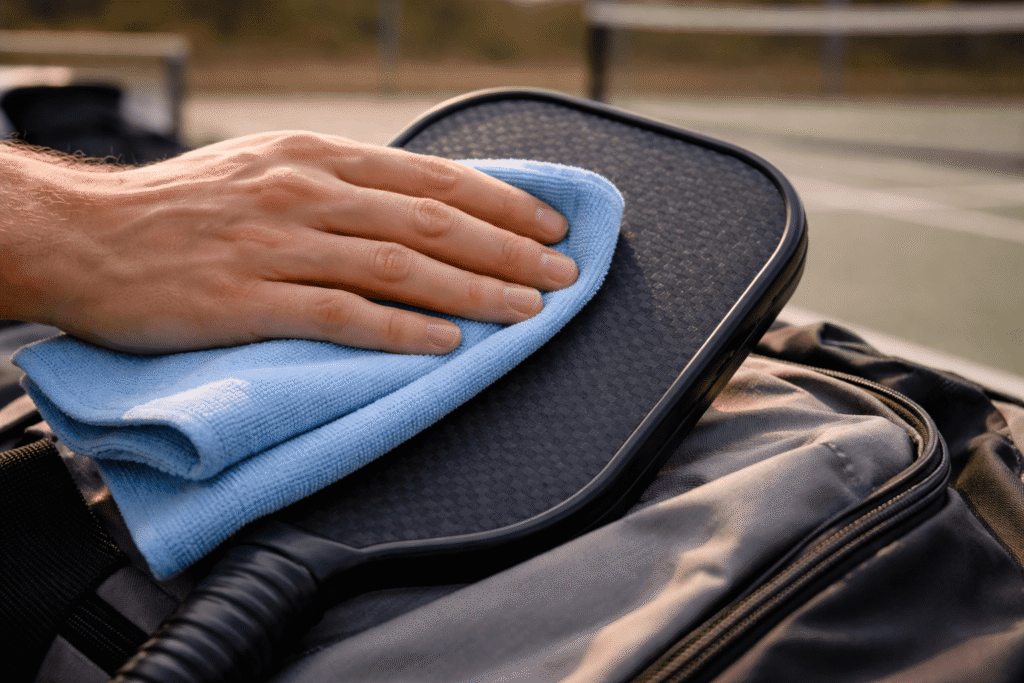
If you are a control player who wins with placement and patience, the best pickleball paddles for your game are lighter with thinner cores and carbon fiber faces. You want feedback. You want to feel exactly where the ball is going when it leaves the face. These paddles will not drive the ball as hard. That is the trade-off.
If spin is your primary weapon, the best pickleball paddle for spins in your hands is one with a raw carbon fiber face, a slightly elongated shape, and a weight light enough to generate head speed. You want texture, length, and speed. Those three things together are what produce the kind of spin that changes points.
If you play all-court and adapt to whatever the point gives you, the best pickleball paddles for your game sit in the middle. Mid-weight, standard or slightly elongated, carbon fiber face, sixteen millimeter core. Nothing extreme. Nothing specialized. A paddle that does everything at a seven out of ten rather than one thing at a ten and everything else at a five.
10. What I Tell People When They Ask Me for the Best Pickleball Paddles
People ask me this constantly. At the courts, in messages, at tournaments. Which paddle should I buy. And my answer is always the same question back to them. What does your game need right now. Not what do you wish your game was. Not what does your partner play with. What does your game, as it exists today, actually need from a paddle.
If they cannot answer that question I tell them to go play more and pay attention to what they struggle with. Then come back and we will talk about paddles. Because the best pickleball paddles in the world are useless information if you do not know what you need from them. And once you do know what you need, the decision gets a lot simpler than the paddle market wants you to believe.
The best pickleball paddles are out there. The best pickleball paddles for intermediate players who need forgiveness and versatility are out there. The best pickleball paddle for spins that will transform how the ball moves when it leaves your hand is out there. The best pickleball paddles for advanced players who want a precision tool that matches their specific game are out there. You do not need to test forty paddles like I did. You just need to know what you are looking for before you start looking.
Figure out your game first. The paddle will follow.